

Should we introduce deposits on furniture to really get the circular economy off the ground? If it is up to Maron van der Krieken, Country Sustainability Manager at IKEA NL, the solution is closer than people think. Although demand for second-hand furniture is high, the volume of return flows remains the biggest barrier. A LinkedIn post by Van der Krieken unleashed a storm of responses from industry professionals: from enthusiastic expressions of support to critical comments on logistics and product quality.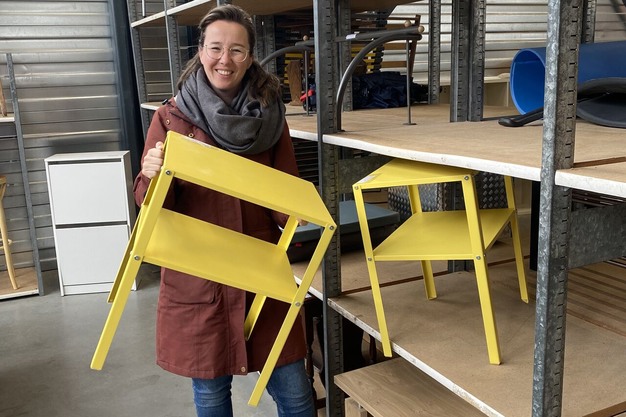 © Maron van der Krieken
"We as IKEA have no problem selling our second-hand products, but we do have a problem getting enough volume of them in," Van der Krieken observes. The solution she suggests is to rebrand the existing 'Buyback Service' to a concept that every Dutch person understands: deposit. Currently, customers already get 20% to 40% of new value back at IKEA when they return furniture, but awareness of this scheme lags behind.
'Hassle' and transport
Reactions to the proposal echo a clear pain point: logistics. Marjolein Benistant (energy educator) notes that bringing furniture to an IKEA store is too high a threshold for many. "You need a means of transport in which it fits and the relatively low price makes the threshold high. Marktplaats is often easier then, as the product is collected from your home."
Van der Krieken acknowledges this problem and reveals that IKEA is currently experimenting with solutions: "We are in the last week of a pick-up service pilot in Utrecht. There is huge interest in pick-up, but consumers have limited willingness to pay for it, while there are of course costs involved." Interior designer Simone van Es is brief but firm: "Pick-up service added and you're done."
Trade-in value or disposal fee?
Not everyone is convinced that the word "deposit" covers the right ground. Marijke Dekker (sustainability adviser) suggests that 'trade-in value' might work better, although Van der Krieken notes that this term has actually caused confusion with regular returns in the past. Lara van der Veen adds that the terminology on price tags is crucial: "With deposits, you normally pay on top of the price. It would be better to speak of a guaranteed return value."
A more compelling solution comes from Angelique van Damme (working for the Etten-Leur municipality), who argues for a "disposal fee" as with white goods. "This would make cheap low-quality products relatively more expensive and make recycling more financially interesting," she says. Van der Krieken comments: "I disagree with the assumption that cheap is always bad quality. Instead, the challenge is to financially reward producers who do better."
The 'furniture hunter' and the battle with the sticker
A fascinating vision of the future is that of the 'furniture hunter'. If a cabinet on the street represents a tangible deposit value, it becomes interesting for third parties to collect and return it. Christian Seidl (sustainability consultant) suggests integrating this with the route planning of delivery services: "The same truck delivering a new piece of furniture can immediately take the old one with it."
Still, there are legal bumps. Stéphanie van der Werf (lawyer) recently ran into the fact that IKEA only takes back products with the original product sticker. Van der Krieken explains that this is not unwillingness, but dire necessity due to the European General Product Safety Regulation: "That sticker is essential for traceability in case of production errors. We hate it ourselves, but we have to stay compliant."
Sustainability or consumerism?
A more fundamental criticism is also heard among the professionals. Willemijn Heideman and Rik Ruigrok (Circular Woodmaker) stress that true sustainability starts with making products that simply do not need to be replaced. "Stop restyling your house every two years and buy high-quality furniture," said Heideman. The fear is that a deposit system actually legitimises the "throwaway culture" if consumers think, "I'll bring it back in a year anyway."
Matter of psychology
The discussion shows that the furniture sector is at a tipping point. Whether it is called 'deposit', 'buy-back value' or 'trade-in service': the sector yearns for systems that make reuse as easy as throwing away. According to Van der Krieken, the margin scheme (where VAT is paid only on the profit on second-hand products) already offers a significant financial advantage, often dropping VAT on second-hand items from 21% to around 6%.
The ball is now in the consumer's court as well as logistical innovation. Because as Anouk Arts (sustainability at Dayes) concludes: "Deposits make the value of returning items tangible. If that becomes visible throughout the customer journey, it will be a gamechanger."
Source: LinkedIn / Maron van der Krieken (IKEA NL)