

Germany's furniture market showed signs of stabilisation in 2025, even as sales slipped 1.1% year-on-year to €23.9bn, according to a new industry report from IFH Cologne and BBE Retail Consulting.
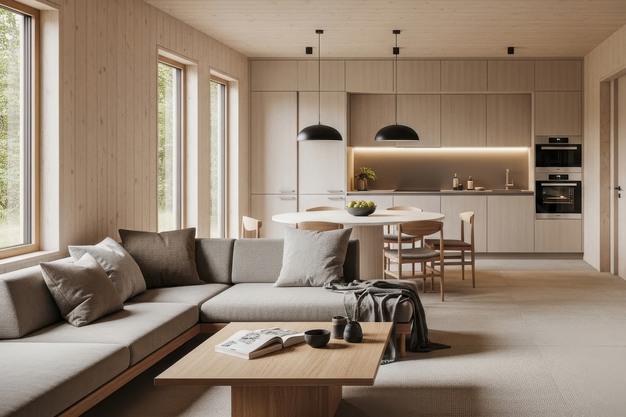 © Md Jahidur Rahman | Dreamstime
The report says the market remains nominally above pre-crisis 2019 levels, suggesting the sharp volatility of recent years is easing. However, weak economic conditions and geopolitical uncertainty continue to delay a stronger recovery.
Most categories declined in 2025, with office furniture recording the steepest fall at 3.6%. Kitchens and garden furniture were among the few segments to post modest gains.
Researchers also highlighted structural change in distribution channels. After two years of normalisation, online furniture retail regained momentum, with mail-order specialists and pure-play e-commerce operators growing again. Large furniture chains and kitchen specialists also reported slight gains.
By contrast, pressure on smaller independent retailers continues to intensify, widening the gap between national chains and local operators.
Philipp Hoog described 2026 as a year of positioning, arguing that retailers who improve structures, strengthen sales channels and better integrate online and offline operations will be best placed for future growth.
For the wider European interiors sector, Germany's performance suggests demand has not collapsed, but is becoming more selective and channel-driven. Scale, digital capability and category focus increasingly appear to be decisive advantages in a market still searching for renewed momentum.
Source: www.moebelmarkt.de