


A dedicated dressing room remains an aspirational feature in many homes, yet designers increasingly emphasise that it does not require a large footprint. With thoughtful spatial planning, even compact areas can be transformed into efficient, elegant storage zones that combine practicality with a sense of calm order.
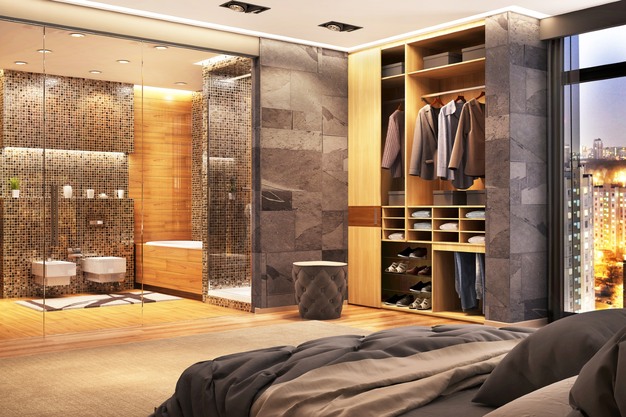 © Slavun | Dreamstime
According to guidance from the Association of the German Furniture Industry, a minimum of around four square metres is sufficient to create a functional dressing space. This can be achieved in underused corners, beneath sloping ceilings, or by partitioning sections of a bedroom or hallway with sliding doors.
Where space is limited, floor-to-ceiling wardrobes are widely recommended for their ability to maximise vertical storage while maintaining a streamlined appearance. Closed systems help reduce visual clutter, while supplementary hanging rails and mobile storage units can add flexibility without overwhelming the space.
Material and finish choices are also shaping contemporary dressing room design. Smoked glass, matte surfaces and soft pastel tones are increasingly favoured for their ability to create a refined, cohesive atmosphere. These finishes introduce subtle depth while keeping the overall aesthetic light and harmonious.
Practical additions such as integrated mirrors and accessible accessory storage further enhance usability, ensuring the space remains functional as well as visually considered. Ultimately, the modern dressing room is defined less by size and more by intelligent design, where even the smallest footprint can be elevated into a polished, personal space.
Source: www.msn.com