

In an industry increasingly shaped by disruption, supply chain unpredictability has become one of the defining challenges for furniture manufacturers. Fluctuating availability of raw materials such as wood, MDF, plywood and LVL, combined with price volatility and transport instability, has placed traditional production models under pressure.
 © UMP Group
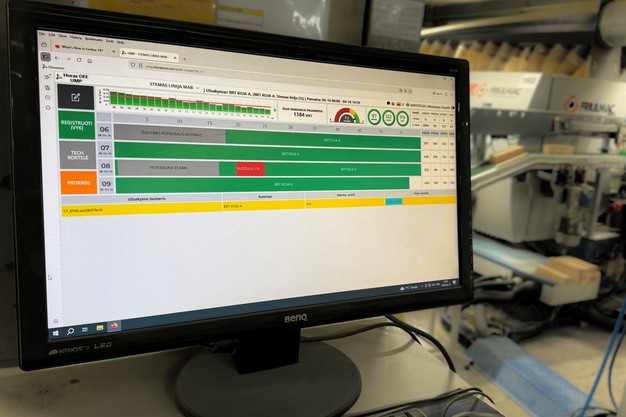
Real-Time Monitoring of Overall Equipment Effectiveness (OEE).
'The biggest challenge today is limited visibility across the value chain,' UMP Company explains. 'Traditional just-in-time models are becoming risky, which increases the need for reliable, predictably operating component suppliers.'
In response, UMP Company has implemented a hybrid production planning model that combines make-to-order manufacturing with predictive capacity planning. This approach is built on long-term customer forecasts, dynamic capacity allocation and prioritisation based on project criticality.
'Finite capacity planning allows us to realistically assess production loads and avoid overloading,' the company notes. 'This ensures a high level of on-time delivery accuracy.'
Stability, however, extends beyond planning. UMP Company emphasises the importance of structured processes and clearly defined control points throughout production. Incoming raw material inspections, in-process controls and final quality checks are embedded into operations to minimise variability.
'A key role is played by digitalised production monitoring,' the company adds. 'Real-time tracking allows deviations to be identified early and corrective actions to be taken immediately.'
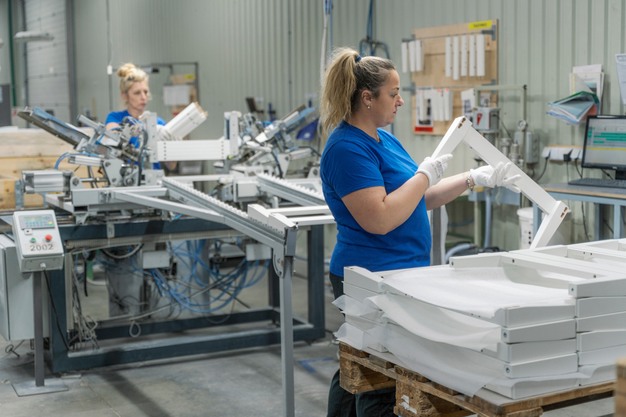 © UMP Group
Quality control is integrated throughout every stage of production.
Quality management is approached as a continuous process rather than a final checkpoint. By following a "right-first-time" principle, UMP company focuses on early defect detection to reduce rework and prevent delays.
'Quality control is integrated throughout the entire process,' they explain. 'Early identification of defects reduces the risk of rework and scrap, which are among the main causes of delays.'
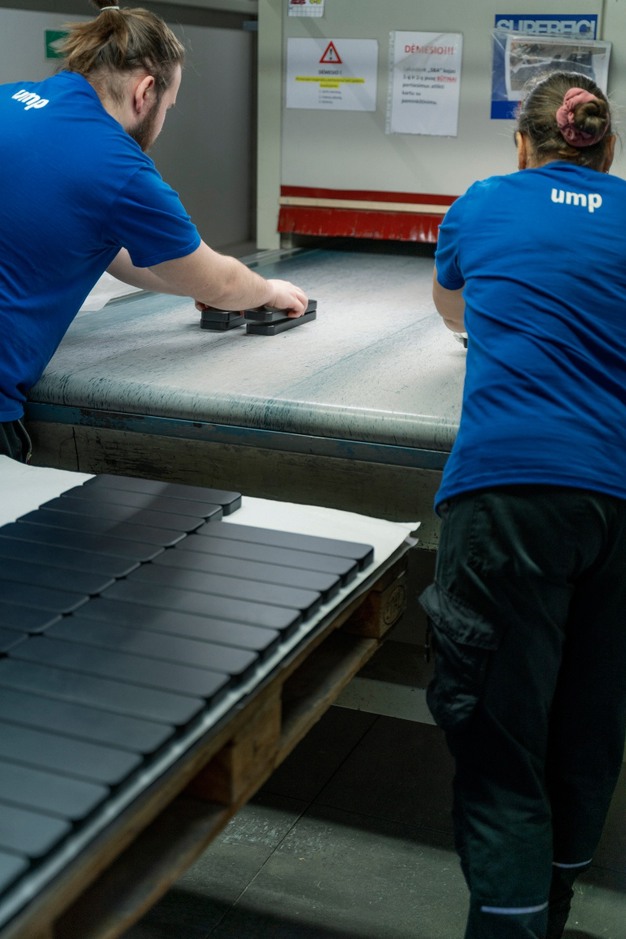 © UMP Group
Standardised processes and structured workflows support predictable delivery performance.
Logistics is another critical area where predictability is actively engineered. Through standardised solutions and collaboration with trusted logistics partners, UMP company applies consolidation strategies, optimised packaging and pre-agreed delivery windows.
'This helps reduce transit time variability and ensures a high level of delivery predictability,' the company states.
The effectiveness of this approach was demonstrated during a recent disruption, when a shortage of wood coincided with increased client demand. Rather than halting production, UMP company re-optimised production sequences, activated alternative supply channels and prioritised critical components.
'At the same time, we maintained continuous communication with the client,' they say. 'As a result, we managed to meet delivery deadlines without stopping production on the client's side.'
For UMP company, the key to navigating today's volatile environment lies in combining process control with data-driven decision-making. Real-time visibility and performance monitoring, particularly of Overall Equipment Effectiveness (OEE), enable rapid responses to deviations.
'Predictable supply is not only the result of planning,' the company concludes. 'It is the ability to respond quickly and in a structured way to changes in the global supply chain.'
More information:
UMP Company
Molėtų kel. 27, Antakalnio II k.,
Ukmergės raj. sav., LT-20101
+370 340 63620
[email protected]
www.ump.lt
Lithuania