


Germany's foreign trade momentum slowed in May 2025, with exports declining by 1.4% and imports by 3.8% compared to April, according to preliminary calendar- and seasonally-adjusted figures released by the Federal Statistical Office (Destatis). Exports stood at €129.4 billion, while imports totalled €111.1 billion, resulting in a trade surplus of €18.4 billion—an improvement from April's €15.7 billion, but still below the €22.3 billion recorded in May 2024.
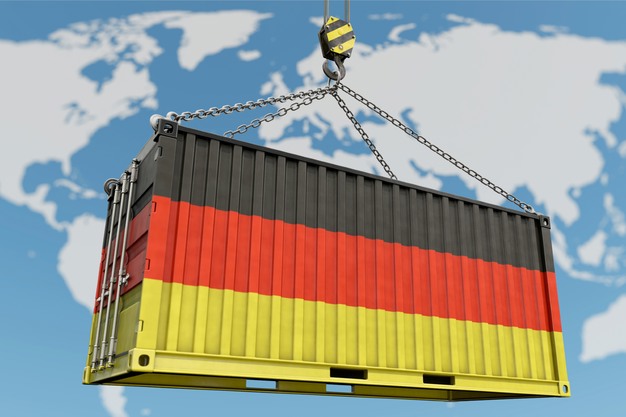 © Kontakt5956 | Dreamstime
Year-on-year, exports rose modestly by 0.4%, while imports surged 4.2%. Destatis noted: 'In May 2025, calendar- and seasonally adjusted goods worth €129.4 billion were exported from Germany, and goods worth €111.1 billion were imported into Germany.'
Trade with EU member states weakened, with exports to the bloc falling by 2.2% to €71.3 billion and imports down 3.6% to €57.7 billion. Within the eurozone, exports dropped by 2.6%, and imports by 3.2%. Non-eurozone EU trade also shrank.
By contrast, exports to the United Kingdom surged by 15.1% to €7.2 billion, while imports rose 4.0% to €3.1 billion, making the UK a rare bright spot in an otherwise muted trading landscape.
Trade with the United States suffered a sharp setback: exports declined 7.7% from April to €12.1 billion—the lowest since March 2022—and were down 13.8% year-on-year. Exports to China fell 2.9% to €6.8 billion, while imports from China, still Germany's largest source, dipped by 1.0% to €13.8 billion.
Trade with Russia continued to shrink, with exports down 12.1% month-on-month and 11.1% year-on-year to €0.5 billion. However, imports from Russia rose 9.4% from April to €0.1 billion, though still nearly 40% below May 2024 levels.
On a nominal (non-adjusted) basis, exports reached €130.2 billion (+2.8% YoY), while imports hit €112.6 billion (+6.1% YoY), leading to a surplus of €17.6 billion.
Destatis cautioned that these are preliminary figures and added: "A comparison between adjusted and unadjusted (nominal) series is therefore not meaningful." Full detailed results are due 18 July.
This data arrives amid shifting trade patterns and rising economic uncertainty, offering key insights for industries across Europe reliant on German exports and imports—particularly in manufacturing, design, and interior materials sourcing.
More information:
Destatis
www.destatis.de