
As interior projects across Europe focus on adaptability and functionality, art is being treated as an element that serves the design, not just decor. Fiona Achen, Art Curator and Interior Architect at IONNYK explains: 'The company integrates into contemporary interiors as both a design object and a piece of art, rather than a technological device.' Its paper-like finish and wireless format mean it 'coexists naturally with materials such as wood, stone, or textiles, without disrupting the atmosphere of a space', allowing designers to work with a medium that is simple, refined, and versatile.
'The e-paper technology reflects ambient light and offers a finish very close to photographic paper,' says Fiona, highlighting how the frames avoid visual fatigue and fit seamlessly into interiors. This material approach ensures that art supports the space rather than competing with it.
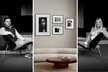
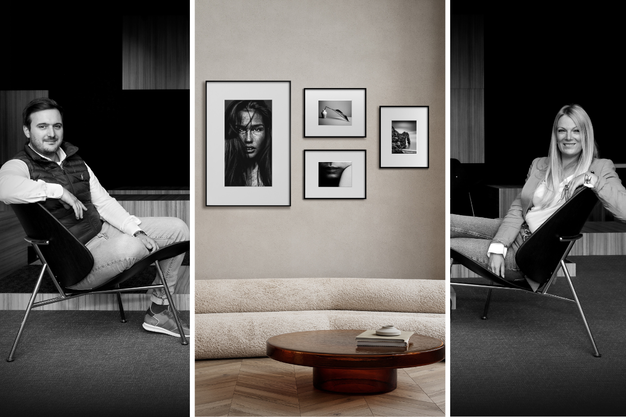 © IONNYK Founders of IONNYK, Mathieu Demeuse (CEO, left) and Charlotte Dubois (Art Director)
Adapting spaces over time
Flexibility is a growing priority in residential design. Fiona explains: 'In residential projects, it allows clients to curate their own environment over time, adapting the artworks to seasons, moods or life moments'. This approach reduces the need for physical replacements while keeping interiors dynamic.
In hospitality, the technology becomes part of the guest experience. 'At 20° Sud in Mauritius, artworks evolve three times a day, creating subtle moments of surprise throughout the stay,' says Fiona. She adds that this approach 'reinforces a sense of intimacy and discovery', showing that evolving content can enhance atmosphere without complicating operations. In corporate environments, she notes: 'For example, in our collaboration with Barnes in Paris and Cannes, we design curated photographic collections for their agencies, renewed every six months, allowing them to offer clients an immersive and constantly evolving experience.'
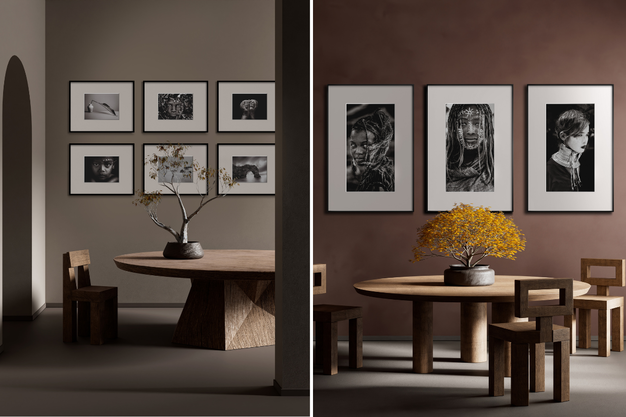 © IONNYKAndi Abdul Halil, George Digalakis (left), and Serge Anton (right)
Simple integration for designers
IONNYK is designed to fit smoothly into professional workflows. Fiona explains: 'It can be integrated at different stages of a project, either during the design phase as part of the overall narrative or later on as a way to enrich and activate an existing space'. This flexibility lets designers introduce the system when it is most relevant to the spatial story.
Installation is straightforward. 'The frames are entirely wireless, with up to one year of autonomy, offering complete freedom of integration without any power constraints,' says Fiona. She also highlights the modularity: 'Designers can create spaces that evolve, without modifying the object itself'. Content updates are handled digitally, with her explaining: 'It is managed remotely via our application, enabling centralized control and seamless updates across one or multiple locations'.
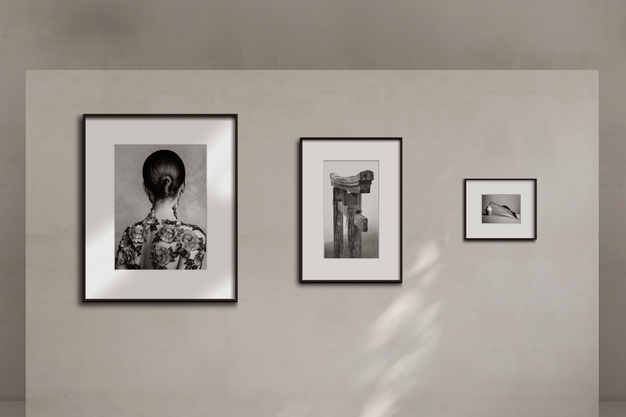 © IONNYK IONNYK's 3 different formats
Reducing material impact
Sustainability is central to how IONNYK is designed. 'The frames only consume power when the artwork changes,' says Fiona, emphasizing reduced energy use compared with traditional screens. She adds: 'A single frame can host an evolving collection over time, without the need for transport or replacement'.
Durable materials further support sustainability. Fiona explains: 'We design our frames using durable materials such as aluminium and museum-grade glass, with a strong focus on longevity.' Local production also reduces the environmental footprint: 'The product is designed in Belgium and assembled in our workshop.' She situates this approach within a wider industry trend: 'It is part of a model that prioritises access to curated, evolving content rather than the multiplication of physical objects'.
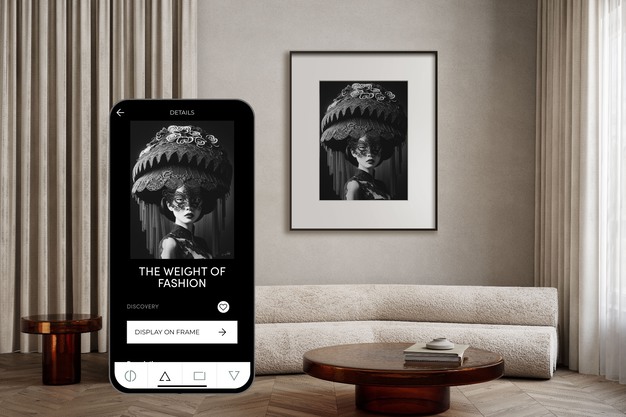 © IONNYK Ability to change the display on the digital artwork with only one press on your phone
Linking art and identity
Beyond technical benefits, IONNYK connects content with the identity of a space. 'IONNYK creates value when it connects art, space and narrative,' she explains. In a Lausanne project, a 'wall of fame' displayed personalities who had stayed at the hotel, transforming 'memory into a living installation, evolving over time'.
For brands and hospitality venues, she explains: 'We develop fully bespoke collections aligned with the identity of the space', often drawing from archives to create 'true private collections' that remain exclusive. She summarises the wider implication: 'It is no longer simply about decoration, but about creating a living, often exclusive experience, closely connected to the identity of a place'.
IONNYK will be present at the Archiproducts Milano Showroom from April 20 to 26, as part of a high-end design curation with scenography by Studiopepe.
More information:
IONNYK
Av. Reine Astrid 92,
1310 La Hulpe,
[email protected]
www.ionnyk.com
+32 470 10 28 39
Belgium