

Ahead of Salone del Mobile, Marta Sala presents a vision of collectible design shaped by architectural thinking, material precision and a deeply rooted Milanese legacy. Through Marta Sala Editions, she has developed a model that moves beyond traditional furniture production, one that positions design as both a cultural narrative and a rigorous process of translation between idea, material and space. The team at InteriorDaily spoke to Marta to share her vision behind this intricate craft and their expectations of the upcoming Salone del Mobile.
 © Marta Sala EditionsMarta Sala, the founder of Marta Sala Editions.
For Marta, the starting point of any project is unequivocal. 'A project begins with a clear and structured idea,' she explains. 'When the underlying concept is strong, the object gains identity and value.' This emphasis on clarity defines her understanding of authorial and research-driven design, not as an abstract notion, but as a discipline grounded in coherence. It is precisely this clarity, she suggests, that allows design to communicate globally: 'Research-driven design develops a cultivated yet accessible language, capable of engaging an increasingly aware and demanding international audience.'
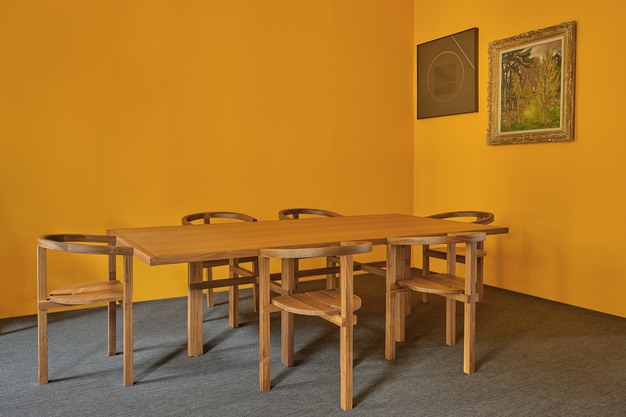 © Marta Sala EditionsArmory table by Herzog & de Meuron.
Material selection plays a central role in this process. Marta's work demonstrates a deep respect for the intrinsic qualities of materials, particularly in her use of canaletto walnut. 'The selection of materials such as canaletto walnut is integral to the project,' she says. 'It is a living material that requires expertise and precision.' For Marta, material is not passive, it actively shapes the outcome. This demands a level of execution that matches the ambition of the concept: 'The quality of execution must match the quality of the design, ensuring authenticity, durability and long-term value.'
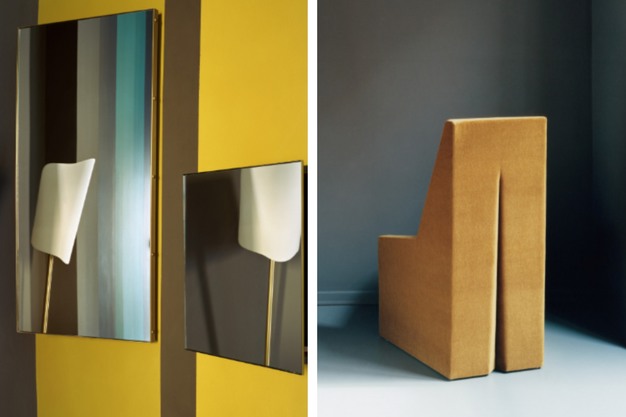 © Marta Sala EditionsReinor Mirrors (left) and Levinia Armchair (right), part of the showroom highlights developed in collaboration with Lazzarini Pickering.
This alignment between concept and craft becomes especially evident within collectible design, which Marta describes as a space for both formal and productive experimentation. 'Collectible design offers space for both formal and production research,' she notes. 'It allows experimentation with new typologies and materials.' In contrast to mass production, this approach enables designers to explore new languages while remaining responsive to a changing market. As she puts it, it is a field 'responding to an evolving market and a demand increasingly focused on quality, identity and cultural relevance.'
What distinguishes Marta Sala Editions within this landscape is its close relationship with architecture. Rather than designing in isolation, Marta collaborates with architects, often translating site-specific interventions into collectible pieces. The result is a body of work that carries the intellectual weight of architecture into the scale of furniture. In this sense, her role extends beyond that of a designer; she operates as both producer and editor, shaping a coherent narrative across diverse collaborations.
This narrative is further amplified through the platforms where the work is presented. 'Galleries and fairs provide direct engagement with an informed international audience,' Marta explains. These contexts are not only about visibility, but about dialogue and validation. 'They are platforms that demand coherence and precision, while offering visibility on a global scale that extends beyond the reach of a traditional showroom.' At Salone del Mobile, particularly within the inaugural Salone Raritas section, this exchange becomes central, positioning collectible design within a broader cultural and commercial conversation.
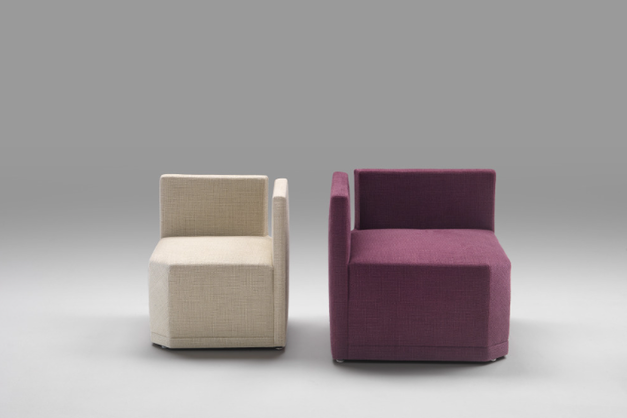 © Marta Sala Editions
Dudina and Dudotta by Lazzarini & Pickering.
At the same time, Marta is attentive to the growing intersection between collectible design and the B2B and contract sectors. While these environments require consistency and scalability, she sees an opportunity rather than a contradiction. 'The B2B sector requires quantity and reliability,' she acknowledges. 'Edition-based design that is repeatable and customisable meets these needs without compromising quality.' Adaptability, in this context, becomes a strategic tool: 'The ability to adapt a project creates distinctive pieces designed to endure beyond trends.'
This balance between uniqueness and reproducibility reflects a broader shift in how collectible design is understood. For Marta, it is no longer confined to exclusivity or limited editions alone, but extends into a more versatile and resilient model, one capable of engaging different scales without losing its identity.
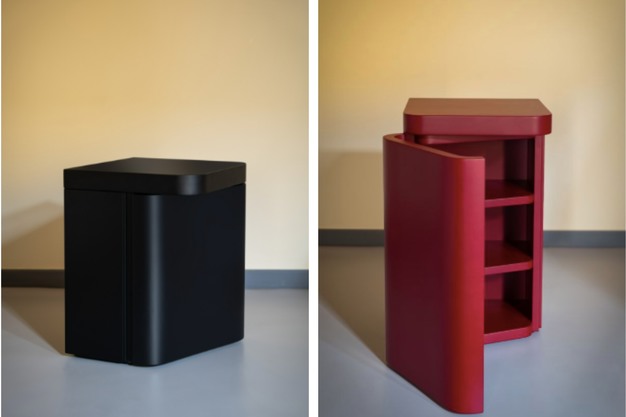 © Marta Sala EditionsLuna low (left) and Luna (right) developed in collaboration with Federico Peri.
As she prepares for her debut in Salone del Mobile's Salone Raritas, Marta Sala's work offers a compelling perspective on the future of design. Rooted in strong ideas and refined through material intelligence, her approach demonstrates how architectural thinking can be translated into objects that are both intellectually rigorous and practically relevant. In doing so, she continues to shape a distinctly contemporary expression of Italian design, one that is grounded in heritage, yet open to new forms of experimentation and dialogue.
More information:
Marta Sala Editions
Corso Monforte 15 - 20122
+39 02 366 398 16
[email protected]
www.martasalaeditions.it
Italy