

A growing debate within the European furniture and interiors sector suggests that low-cost furniture production in Europe may no longer be viable. Rising labour costs, shifting market dynamics, and evolving consumer expectations are forcing manufacturers to rethink long-standing strategies.
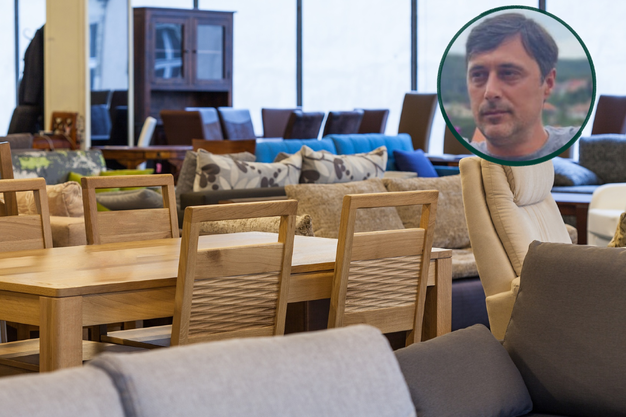 © Dreamstime | Alexandru Meseșan
Founder Alexandru Meseșan of Ixaria.
Alexandra Meseșan, co-founder of Ixaria, recently shared his perspective on LinkedIn, arguing that the industry must move away from competing on price alone. Ixaria is a furniture brand centred on design, sustainability, and long-lasting quality, aiming to create pieces that balance aesthetics with durability. The company's philosophy aligns with a growing movement in the sector towards higher-value production. According to Meseșan, the era of producing "cheap furniture" within the European Union is coming to an end.
He explains that labour costs in traditionally lower-cost regions, particularly in Eastern Europe, are steadily converging with broader EU averages. Combined with a shrinking workforce and rising living standards, this trend is eroding Europe's competitiveness against global manufacturing hubs that still benefit from significantly lower production costs.
At the same time, market developments indicate a clear shift in demand. Growth in European furniture sales is increasingly concentrated in the higher-end segment, while lower-priced categories are stagnating or even declining. Consumers are placing greater emphasis on durability, craftsmanship, and long-term value rather than purely on affordability.
Meseșan warns that companies continuing to rely on price-driven strategies risk becoming trapped in what she describes as producing "expensive cheap furniture", products that are no longer competitive on price, yet lack the differentiation needed to succeed in the premium segment.
Instead, he encourages manufacturers to pivot towards:
• Higher-quality production
• Sustainable and responsibly sourced materials
• Stronger brand identity and positioning
• Long-lasting, value-driven design
This shift reflects a broader transformation within the interiors market. Value perception, authenticity, and product longevity are becoming key drivers of purchasing decisions, reshaping not only consumer behaviour but also Europe's role in the global furniture industry.
The discussion underscores a critical moment for the sector: adapt to a value-driven future or risk losing relevance in an increasingly competitive global landscape.
Source: Alexandru Meseșan via LinkedIn.