

As the International Bathroom Exhibition prepares to return to Salone del Mobile.Milano from 21–26 April 2026, new insights from Assobagno highlight how the bathroom is evolving into one of the most dynamic spaces in the home.
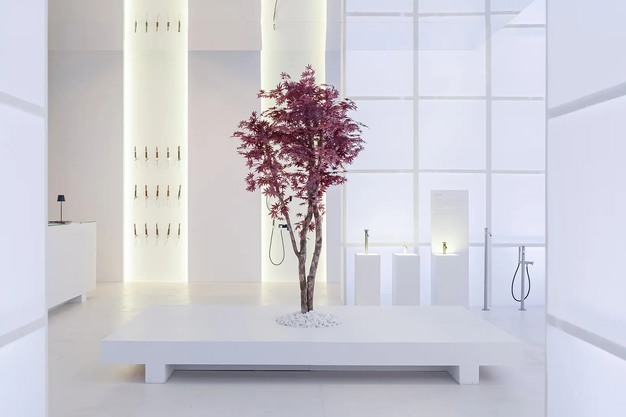 © Ruggiero Scardigno | Salone del Mobile.Milano
According to Elia Vismara, President of FederlegnoArredo's Assobagno, the bathroom is no longer purely functional but increasingly positioned as a centre for wellbeing, self-care and quality time, driving significant changes in both design and technology.
From function to wellbeing-driven design
Bathrooms are becoming more experiential, with design responding to a shift in consumer expectations. Rather than focusing solely on practicality, brands are now creating spaces that support relaxation and personal rituals, aligning with broader lifestyle trends.
This shift is also reflected in the growing importance of the hospitality sector, where high-end hotel bathrooms are playing a central role in guest experience, prompting increased investment from manufacturers.
Durability overtakes design in purchase decisions
One of the most notable changes in consumer behaviour is the emphasis on sturdiness and durability, now ranking alongside functionality and value for money as a key decision driver—often even ahead of aesthetics.
At the same time, digitalisation is reshaping the buying journey. While 97% of European consumers research products beforehand, most purchases still take place in-store, highlighting the importance of a multi-channel approach that blends online inspiration with physical retail experiences.
A new era of finishes and material innovation
Technological advancements, particularly in surface treatments such as PVD (Physical Vapour Deposition), are enabling a wider palette of finishes. Where chrome once dominated, consumers can now choose from bronze, gold, copper, gunmetal and brushed steel, marking a subtle but impactful shift in bathroom aesthetics.
This evolution allows brands to differentiate through colour and materiality, while maintaining performance and durability.
Emerging design trends: total look and sculptural elements
Design trends are also shifting towards more cohesive environments, with the rise of the "total look" approach across bathroom interiors. Meanwhile, traditional bathtubs are declining in everyday use, replaced by freestanding models with strong sculptural value.
In areas such as shower enclosures, minimal frameless designs are giving way to the return of defined profiles, offering opportunities for colour accents while maintaining visual lightness.
Looking ahead: connectivity and inclusive design
Looking towards 2030, connectivity is expected to play a growing role, with innovations ranging from health-monitoring sanitaryware to integrated digital interfaces. However, Vismara suggests that technology will remain secondary to a more fundamental priority: longevity and adaptability.
Future bathrooms will increasingly focus on inclusive design, incorporating features such as floor-level access, non-slip surfaces and integrated support elements, ensuring spaces can adapt to changing needs over time.
An evolving platform for the industry
With strong exhibitor interest and a renewed focus on innovation, the International Bathroom Exhibition 2026 is set to reflect a dynamic and competitive market, where clear product differentiation and meaningful innovation will be essential.
Ultimately, the bathroom is being redefined, not just as a private, intimate space, but as a flexible, inclusive environment that balances design, function and wellbeing.
More information:
Salone del Mobile.Milano
www.salonemilano.it