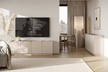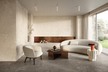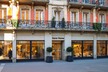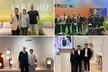


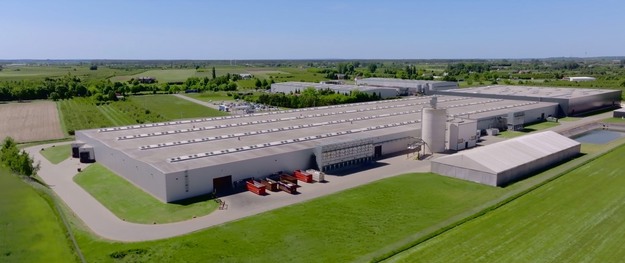
INTERMEBLE is a Polish manufacturer of ready-to-assemble flat-pack furniture, based in Sompolno, a small town in the Wielkopolska region, right in the geographic heart of Poland. The company operates two production facilities, employs several hundred people, and exports to more than 40 countries. We spoke with Nina Szymańska, co-owner of INTERMEBLE, at Meble Polska 2026 in Poznań.
 © Intermeble
INTERMEBLE's story began in 1921, when the great-grandfather of today's owners opened a carpentry workshop in Brdów, a small town in central Poland. More than a hundred years and four generations later, the family business has developed into a manufacturer with two production facilities in Sompolno, exporting to over 40 countries and shipping millions of flat-pack furniture packages each year.
According to Nina Szymańska, co-owner of INTERMEBLE, the company has grown while maintaining a balance between scale and careful production. "We work with Europe's largest retailers, and they expect precision, the right product, the right quality, delivered on time, every time," she says. Delivering consistently across hundreds of product lines and multiple markets, she adds, has been a focus built over generations.
Polish advantage
Poland has become one of the world's major furniture exporters, with more than 80 percent of production destined for international markets. Part of this development can be traced back to the 1960s, when large-scale flat-pack manufacturing began to take root in the country.
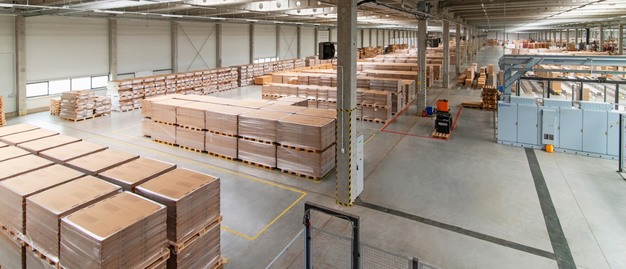
Today, geography and access to raw materials also play an important role. Poland's extensive sustainably managed forests supply pine, spruce and beech, which are widely used for particleboard and MDF production. The relatively short and traceable supply chain from forest to factory supports manufacturing efficiency. Logistics are another factor. From central Poland, INTERMEBLE can reach most EU warehouses within a few days by truck. As Szymańska notes, when transit times, logistics, and tariffs are taken into account, "the real cost gap is much smaller than the FOB price suggests."
 © Intermeble
Changing trade
INTERMEBLE exports to more than 40 countries and deliberately maintains a diversified market portfolio. After two relatively flat years in the industry, the company is seeing signs of improvement as some larger European economies begin to recover.
At the same time, shifts in global trade are influencing sourcing decisions. Ongoing geopolitical instability and disruptions to shipping routes have highlighted the importance of reliable supply chains. "For any retailer who depends on reliable replenishment, that's not an inconvenience, it's a strategic risk," Szymańska says. Shorter delivery times within Europe are therefore becoming more relevant in the decision-making process.
Industrial flexibility
In a competitive market where price pressure continues to increase, INTERMEBLE focuses on what Szymańska describes as industrial flexibility. The company manages multiple production programmes simultaneously for different retail partners, each with specific product designs, packaging requirements, branding and logistics.
"Most factories our size are set up for one type of client," she explains. "Running parallel programmes for partners with completely different needs takes a very specific kind of organisation." In addition to manufacturing, the company works closely with partners on co-development, private-label production and logistics planning aligned with retail calendars.
 © Intermeble
Cost pressures
Rising costs remain a challenge across the European furniture industry. Polish furniture exports declined in 2024, while raw material prices are still higher than before the pandemic, and energy and freight markets continue to fluctuate.
INTERMEBLE's response is based on three main elements: efficiency, supply chain discipline and long-term partnerships. Investments in automation and process optimisation began years before the recent energy crises, helping the company absorb some of the impact when costs increase. Procurement processes are structured and data-driven, with a strong focus on reducing waste.
Planning together with clients is also key. "In times like these, having your manufacturer close to the end market and less exposed to intercontinental disruptions isn't a luxury; it's risk management," says Szymańska.
 © Intermeble
Design balance
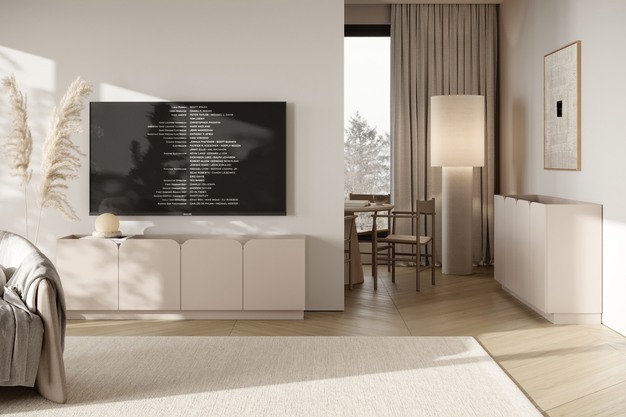
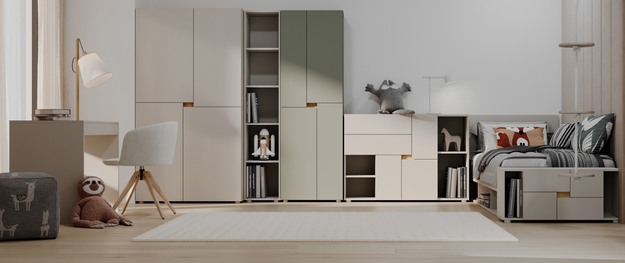
Although INTERMEBLE specialises in large-scale flat-pack furniture production, design and product development play an important role in the process. Retailers increasingly expect products that look appealing online, are easy to assemble and meet price expectations at the same time.
To address this, the company works with an in-house design team that is closely connected to production. This ensures that designs are developed with manufacturing realities in mind. "We don't design things that are beautiful on screen but impossible to make efficiently," Szymańska explains. The company also draws on broader European trends, particularly Scandinavian-inspired aesthetics, and increasingly collaborates with clients during the design phase.
Material trends
In the European furniture market, natural-looking materials and finishes remain widely used. Light oak tones, warm walnut shades and surfaces designed to replicate real wood textures are particularly visible in current collections. Improvements in decorative materials have made it possible for flat-pack furniture to achieve a more refined appearance while remaining accessible in price.
Regulation is also shaping the industry's direction. Upcoming European policies, including Digital Product Passports under the Ecodesign Regulation and the EU Deforestation Regulation set to take effect at the end of 2026, will require greater transparency in sourcing and production. For manufacturers with traceable supply chains within Europe, these developments may present opportunities.
Looking ahead
For the coming decade, INTERMEBLE aims to strengthen its position as a manufacturing partner for large European retailers, focusing on reliability rather than competing solely on price. The company plans to continue investing in technology, design capabilities and people.
"As a family business, we think in generations, not quarters," Szymańska says. This long-term perspective, she explains, allows the company to invest in developments that will shape the future of the industry.
Recent industry events also reflect ongoing activity in the sector. Meble Polska 2026, for example, brought together around 400 companies from 22 countries, making it the largest edition of the fair so far, an indication of the continued relevance of European furniture manufacturing.
More information:
INTERMEBLE
[email protected]
www.intermeble.pl
Poland