

The escalation in the Middle East is keeping global markets in a stranglehold. Although the initial shock in energy markets appears to be easing, ABN AMRO warns of ongoing uncertainty. For the interior design sector and the housing market, the effects on inflation and mortgage rates are particularly significant. InteriorDaily examines three scenarios of the conflict and their potential impact on the Dutch economy. 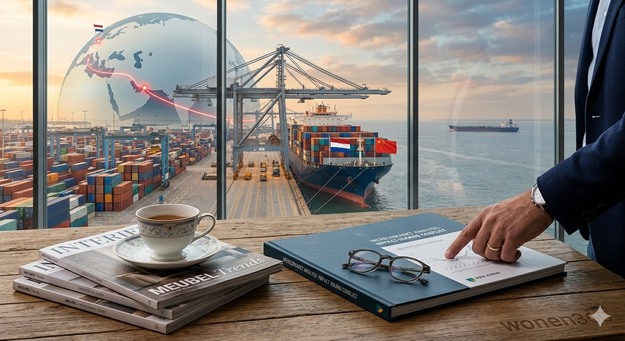
The conflict, now in its 11th day, has pushed geopolitical risk to its highest level since the Iraq War in 2003. Although President Trump suggested last night that an end is in sight "very soon," the situation in the Strait of Hormuz, a vital artery for global energy supplies, remains extremely fragile.
Three scenarios for the coming months
ABN AMRO outlines three possible scenarios, each with its own impact on consumers' wallets and retailers' operations:
-Positive scenario (Conflict ends within weeks): The conflict is resolved this month. Energy prices normalize quickly, and the ECB and Fed remain on track with their planned interest rate cuts.
-Middle scenario (Conflict lasts up to two months): Oil and gas prices stay elevated for longer (oil around $110 a barrel). In this case, the ECB could implement a pre-emptive rate hike at the end of April to curb inflation.
-Negative scenario (Conflict lasts up to a year): A prolonged blockade of the Strait of Hormuz pushes oil prices to $150 a barrel and gas prices to peaks of €180/MWh. This results in a temporary slowdown in growth and forces central banks to raise interest rates more aggressively.
Why the Netherlands will be hit harder
For the Dutch housing sector, the negative scenario is particularly concerning. While the US benefits from its own energy supply, Europe is a net importer. Moreover, the starting position in the Netherlands is more challenging than in the rest of the eurozone. While inflation across Europe was already falling toward 2%, Dutch inflation remained stuck at 2.4% in February.
The combination of a tight labor market and rising wages (collective labor agreement wages are still increasing by more than 4%) makes the Netherlands especially vulnerable to "second-round effects." If energy prices stay high, these costs will be passed on more quickly in the prices of furniture, transport, and services, putting renewed pressure on consumers' purchasing power.
Impact on the housing market and interest rates
For interior retailers, the housing market is a key driver. An ongoing conflict undermines hopes of cheaper borrowing. In the negative scenario, ABN AMRO expects the ECB to raise interest rates further. This would directly affect mortgage rates, potentially slowing the housing market, which was just starting to regain momentum.
There is, however, a bright spot compared to the 2022 energy crisis. Europe is now less dependent on gas for electricity production thanks to the growth of renewables. A shock similar to the one following the invasion of Ukraine, which caused the economy to stagnate for five quarters, seems unlikely even in the worst-case scenario.
Looking at suppliers: China
Turning east is also relevant when sourcing interior products. China, the world's largest importer of oil and gas, is vulnerable to developments in the Strait of Hormuz. Although the country has built up large reserves, the Chinese government has already ordered refineries to suspend fuel exports. As a result, for international logistics and commodity production, a prolonged conflict could create new supply-side bottlenecks.
Source: ABN AMRO Group Economics