

Indian handmade carpet specialist Jaipur Rugs has collaborated with renowned Japanese architect Kengo Kuma to launch FACES, a new rug collection debuting at Milan Design Week 2026. The collection translates the distinctive façades of Kuma's architectural works into richly textured, handcrafted textiles.
 © Jaipur Rugs
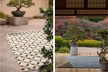
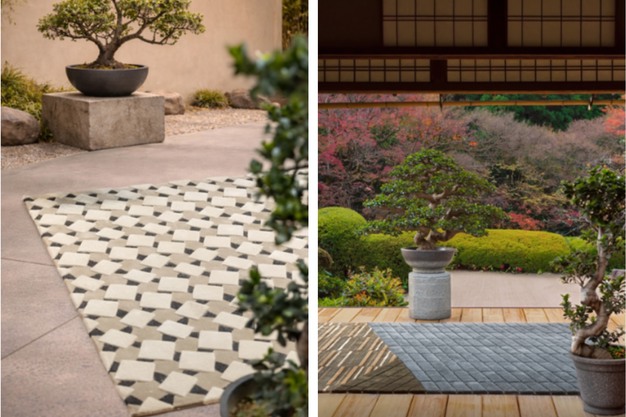
Comprising 16 rugs, the FACES collection explores the architectural "faces" of Kuma's buildings, interpreting their patterns, layers and structural rhythms through weaving techniques and material composition. The designs will be presented during Milan Design Week at Salone del Mobile, the Jaipur Rugs showroom on Via Marco Minghetti, and the Crespi Bonsai Museum, where the brand will host a special installation set among the museum's celebrated Japanese gardens.
The collection reflects Kuma's architectural philosophy of creating connections between nature, material and human experience. Instead of bold colour palettes, the rugs rely on natural earthy tones such as brown, taupe, beige and grey, complemented by graphic contrasts in black and white. Multiple colour variations are available, allowing the designs to adapt to a range of contemporary interiors.
Kengo Kuma explained the concept behind the collaboration: "This collection for Jaipur Rugs explores the subtle 'faces' of my architecture. These architectural expressions, often perceived as fleeting and atmospheric, are reinterpreted through Jaipur Rugs' refined handcraft and material sensibility. What emerges is not a literal translation, but a tactile memory of architecture that feels soft, warm and deeply embedded in everyday living spaces."
Each rug is handcrafted by skilled artisans in Rajasthan, combining wool and regenerated natural fibre viscose. The use of wool reflects Kuma's appreciation for natural materials, while regenerated viscose provides the structural rigidity required to achieve the collection's three-dimensional design effects.
Several pieces in the collection draw inspiration from well-known buildings by Kengo Kuma & Associates. For example, SUKIMA references the façade of the Suntory Museum of Art in Tokyo, translating the rhythm of traditional Japanese latticework into a woven surface that plays with light and shadow. BOKASHI, also inspired by the museum, explores soft transitions of tone through subtle colour gradations.
Other designs reinterpret architectural details from projects such as the Kanayama Community Centre in Gunma, the GC Prostho Museum Research Centre in Aichi, and the Albert Kahn Museum in Boulogne-Billancourt, introducing ideas of layering, structural rhythm and material interplay into textile form.
Greg Foster, Artistic Director at Jaipur Rugs, said: "Kengo Kuma's FACES collection for Jaipur Rugs is architecture as textile. The carpets are immediately recognisable as the facades of some of Kengo's most famous buildings. Pushing the boundaries of craft, Jaipur Rugs artisans have collaborated closely with Kengo and his team to achieve their innovative 3D designs."
The installation at the Crespi Bonsai Museum, running 21–24 April, marks the first time the historic site has hosted a Milan Design Week presentation. The location was selected for its authentic Japanese atmosphere, reinforcing the cross-cultural dialogue between Japanese architecture and Indian craftsmanship that defines the FACES collection.
Founded in 1978, Jaipur Rugs has grown from two looms into a global handmade carpet brand working with over 40,000 artisans across 7,000 looms, with women representing 85% of its weaving network. Through collaborations such as FACES, the company continues to bridge traditional craft and contemporary design on the international stage.
More information:
Jaipur Rugs
[email protected]
www.jaipurrugs.com