

The Aerotim Hangar, designed by Dan Vakhrameyev, reimagines the traditional aircraft hangar as a multifunctional space that combines maintenance facilities, storage and crew living areas within a single architectural volume.
 © Andriy Bezuglov
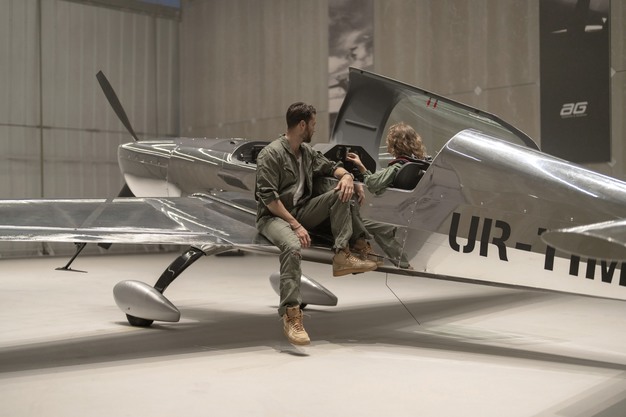
Located as the operational base for the Aerotim team, a collective of aerobatics pilots, freestyle motocross riders and skydivers led by Timur Fatkullin, the 400-square-metre facility serves both as a technical environment for aircraft operations and as a collaborative hub for the crew.
"The overall design language remains deliberately restrained, relying on exposed surfaces, honest materials, and precise detailing to create a mature, disciplined environment suited to pre- and post-flight routines," said Dan Vakhrameyev.
 © Andriy Bezuglov
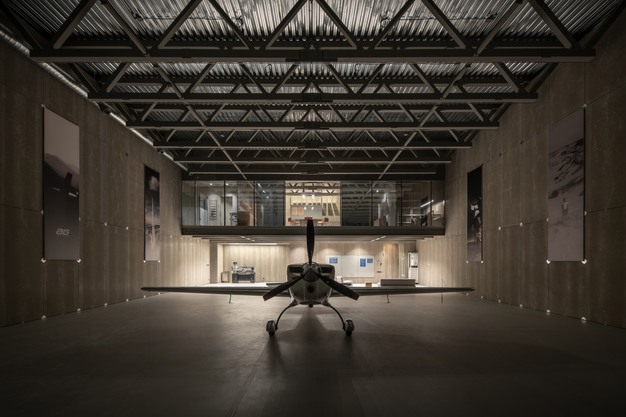
The project centres on a full-height hangar hall designed to accommodate light sport aircraft. Its structure is intentionally exposed, revealing steel trusses, corrugated metal roofing and visible technical systems, reinforcing the building's industrial character.
The main entrance features a full-width vertically lifting gate clad in raw zinc sheets, enabling unobstructed aircraft movement while visually connecting the interior with the surrounding airfield. Natural daylight enters through a polycarbonate upper façade section, enhancing the hangar's functional, aviation-inspired appearance.
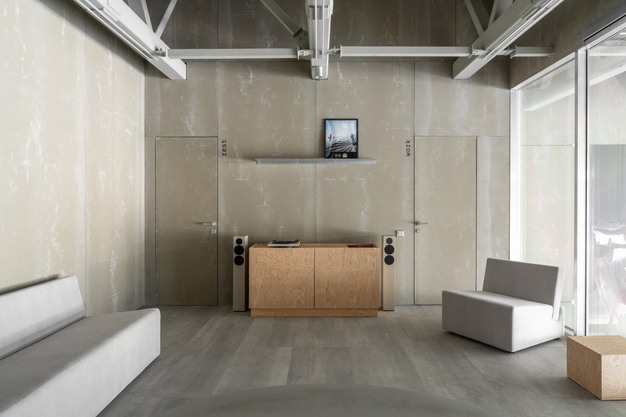
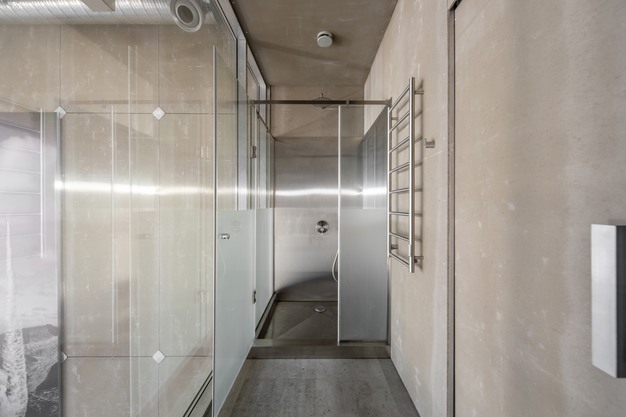
Material selection played a key role in the project's design logic. Large-format Cement Bonded Particle Board (CBPB) panels were used for wall finishes, chosen for their durability and ease of replacement. The panels are installed with visible joints inspired by aircraft fuselage rivet systems, reinforcing the building's aviation identity.
 © Andriy Bezuglov
The same material has been used throughout the project to create doors, worktables and shelving, ensuring a cohesive interior language and efficient use of resources.
Above the main hall, a 94-square-metre Crew Station occupies the second level. Featuring a continuous frameless glass façade, the elevated space offers panoramic views across the hangar, functioning as both an observation point and a collaborative workspace.
The crew area is organised around a central table for flight briefings and operational planning, alongside leisure, office, sleeping and kitchen zones. Furniture combines modern sofas with vintage seating, while warm wood kitchen cabinetry introduces subtle warmth within the otherwise monochromatic interior.
 © Andriy Bezuglov
Lighting follows the building's structural rhythm, with linear LED fixtures integrated along steel frames to provide uniform illumination, complemented by targeted accent lighting for specific zones.
Through its focus on clarity, durability and operational efficiency, the Aerotim Hangar demonstrates how industrial architecture and interior design can support high-performance environments while maintaining a strong visual identity.
More information:
+kouple
[email protected]
www.pluskouple.com