


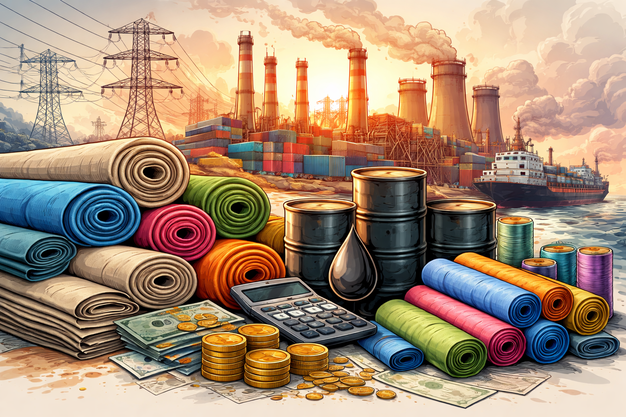
The textile industry is facing rising costs as shifts in the global energy market drive up raw material prices, particularly in China. Domestic fuel and energy price adjustments, influenced by crude oil volatility, are being rapidly passed through the supply chain. Manufacturers are increasingly encouraged to transfer higher energy costs to buyers rather than absorb them, creating a new pricing reality for fabrics. Polyester, nylon, and other petrochemical-based materials are especially sensitive, as crude oil fluctuations quickly translate into higher material costs.
 © AI Generated
The impact is visible at every production stage. Chemical dyes, functional finishes, and other inputs tied to petrochemicals are seeing consistent price increases, while logistics costs are also rising due to higher diesel prices. This cumulative effect is squeezing margins across the industry and challenging the traditional planning models, as quotations for raw materials are now updated almost daily.
Procurement teams are advised to act proactively. Securing fabric volumes early may help mitigate the impact of ongoing price fluctuations and stabilise margins before further cost increases reach the market. The situation represents a structural shift rather than a temporary surcharge, signalling a period of sustained pricing pressure in the global textile sector.
Source: LinkedIn.