

As the European furniture sector adjusts to slower demand and rising operational costs, industry attention is turning from rapid growth to strategic resilience. For manufacturers across Central and Eastern Europe, the coming year is widely seen as a test of adaptability. Aneta Jarczyńska, Vice President of the Management Board and Domestic Sales Director at DAVIS FABRICS, outlines a market defined by pressure, pragmatism, and cautious forward movement.
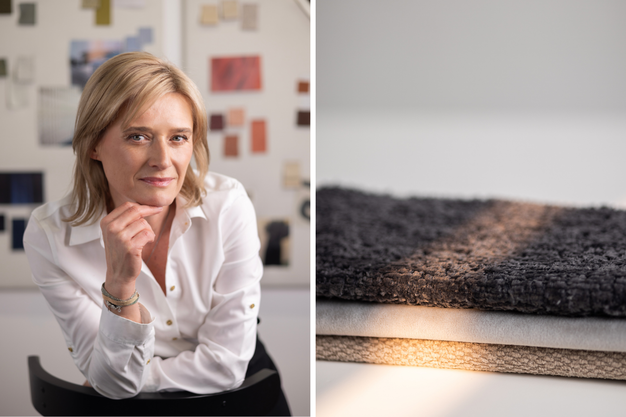 © DAVIS Fabrics
Aneta Jarczyńska, Vice President of the Management Board and Domestic Sales Director at DAVIS FABRICS
Moderate optimism in a difficult cycle
Rather than clear recovery or decline, Aneta describes a landscape of uncertainty. 'Moderate optimism best describes the current situation,' she says. 'Despite slight signs of recovery, it is difficult to speak of a stable trend.' Many producers, she adds, are bracing for a year focused on holding ground. 'In the opinion of many clients, 2026 will be a difficult year, a year of stagnation and a struggle to maintain volumes.'
Export challenges and cost increases are central concerns. 'The slowdown in export markets, weakening demand, and rising costs are having a significant impact on the furniture sector,' Aneta explains. Yet she also points to a growing awareness that change is unavoidable. 'This raises concerns for many companies, but at the same time increases awareness of the need for change in order to maintain a position in the global market.'
Redefining business models
Competition from lower cost regions is accelerating this shift. 'Pressure from imports coming from Asian markets and Ukraine does not inspire optimism,' she notes, adding that the industry is searching for new directions 'in this changing balance of power.' The response increasingly involves structural transformation rather than short term adjustments.
'Many manufacturers see the need to transform their business models,' Aneta says. 'The traditional production model based on orders from Western retail chains is no longer sufficient.' Instead, companies are investing in broader capabilities. 'Diversification of sales markets, automation and robotics, personalisation, process optimisation with AI, e commerce development, and building strong Polish furniture brands are gaining importance.'
Those that combine efficiency with differentiation will be better positioned. 'Companies that automate production and communication while offering products difficult to replace with low cost imports will be in a strong position,' she emphasises, concluding that 'difficult times create strong companies.'
 © DAVIS Fabrics
What buyers are prioritising
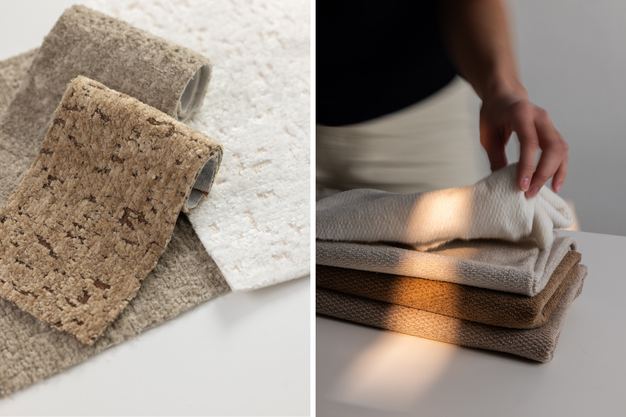
Despite economic caution, demand for design insight remains high. 'Polish furniture design is currently highly valued, both in terms of quality and aesthetics,' Aneta says. Buyers approaching the new season are seeking both inspiration and practicality. 'Before the fair, there is strong interest in information about current design and colour trends as well as new fabric collections.'
Price sensitivity, however, remains unavoidable. 'Market realities mean that price remains an equally important factor,' she explains, noting the sector's volume driven structure. At the same time, operational reliability has become decisive. 'Stable supply chains and predictable order fulfilment are now just as important to manufacturers as design or technical product parameters.'
Fairs as a continuation of dialogue
Major trade events serve less as starting points and more as checkpoints in ongoing cooperation. 'We begin conversations with manufacturers long before the fair,' Aneta says. DAVIS prepares continuously through market analysis, trend monitoring, and partner discussions, ensuring meetings are substantive rather than introductory.
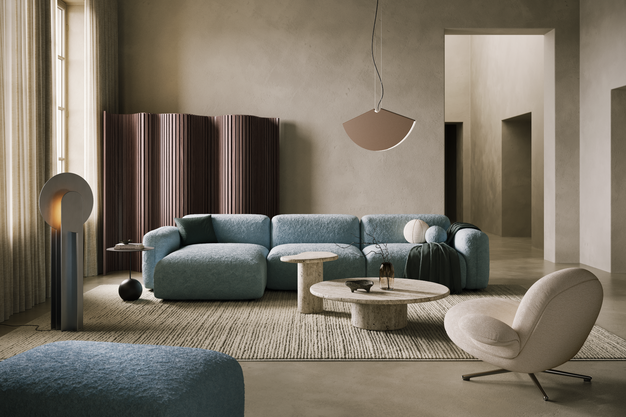
This long term approach is visible across exhibition floors. 'The result is many beautiful pieces of furniture upholstered in our fabrics displayed at both Polish and international exhibitors' stands,' she notes. For participants, the event becomes 'a time to continue previously initiated discussions and finalise new contracts.'
 © DAVIS Fabrics
Partnership beyond products
After more than 30 years in the market, DAVIS emphasises relationships as much as materials. 'We focus on partnership, inspiration, and advisory support,' Aneta says. Her goal for visitors is clear: 'to remember that we are not just a fabric supplier, but a partner who understands industry challenges and supports clients at every stage of cooperation.'
In a period marked by transformation rather than expansion, that collaborative role may prove decisive. As Aneta puts it, 'finding answers to these questions and identifying new opportunities and market trends is a chance to maintain position and continue development.'
DAVIS FABRICS will present its collections at Meble Polska, Hall 3, Stand 8A, where industry professionals are welcome to explore the latest developments or arrange a meeting with the team during the fair.
More information:
DAVIS FABRICS
Meble Polska, 24-27 February, 2026
Głogowska 14, 60-734 Poznań
Hall 3, Stand 8A
[email protected]
www.davis.pl
Poland