

At Madrid Design Festival, Spanish furniture manufacturer Actiu has partnered with artist and designer Regina Dejiménez to present Raíces (Roots), an installation reflecting on wool as a material link between territory, industry and artisanal knowledge. The project is presented within Fiesta Design and the Alianza por la Lana initiative, and is on view at the Institución Libre de Enseñanza from 12 to 22 February 2026.
 © PHE Estudio
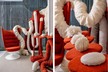
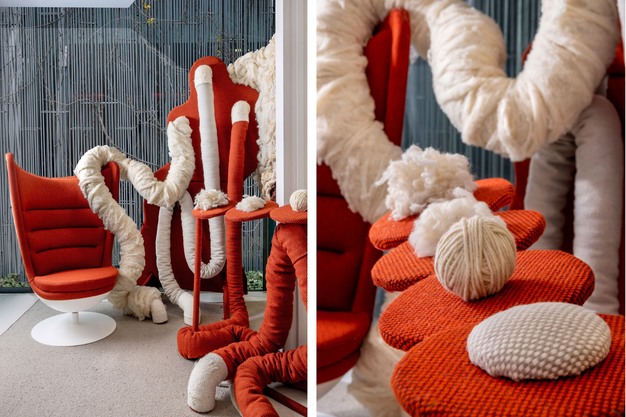
Conceived as a spatial intervention, Raíces uses wool as a narrative thread connecting product, landscape and origin. Actiu's Badminton armchair forms the centre of the composition, positioning industrial design within a wider ecosystem of resources, crafts and territory. The installation will continue in a second stage at ACTIU RED, the company's new international technology hub at Lagasca 99, housed in the Rafael de la-Hoz building in Madrid.
The project aligns with the festival-led Alianza por la Lana, which seeks to recover and highlight wool as an essential cultural, economic and heritage material. The installation unfolds across two connected locations, articulating the relationship between industry, roots, design and craftsmanship.
"For Actiu, this proposal directly connects with its understanding of materials and production processes," said Soledat Berbegal, Board Member and Brand Reputation Director at Actiu. "Working with materials goes beyond their use as raw material. Each resource is part of a system linked to a place, where territory, landscape, livestock, craft and industry form an interconnected value chain. In this context, wool becomes a metaphor for territorial roots and respect for natural cycles and the circular economy."
The installation also reflects Actiu's Life Friendly Spaces philosophy, merging art, design and functionality through the use of one of the company's iconic products. Artist Regina Dejiménez said: "Actiu is an example of an industry deeply integrated into its local, environmental and territorial context. My proposal seeks to make visible that flow of energy that runs from the landscape to the objects we use every day. The composition of upholstered tubes that emerge and interconnect represents that invisible system that sustains design and production."
The project foregrounds the often-unseen value chain behind furniture production. "It speaks about that value chain which often remains unseen," Dejiménez added. Visitors are guided through a tactile and pedagogical journey, following wool from shearing and carding to spinning and weaving.
Badminton, designed by Javier Cuñado, is highlighted for its durability and acoustic performance. "Badminton embodies key values for Actiu such as durability, care, and the long life cycle of the product. It is a piece designed to be maintained and updated, not replaced," said Berbegal, drawing parallels between product longevity and wool as a "living, repairable and renewable material".
Beyond the installation, Actiu is testing the integration of Spanish wool into future products, aiming to strengthen local circular economies and reintroduce artisanal knowledge into industrial processes. "In Spain we have some of the finest merino wool in the world, yet for years this resource has not been sufficiently cared for or valued. Materials that do not find their place in the market and in industry tend to disappear," Berbegal said.
More information:
Actiu
www.actiu.com