
Wayst, an ongoing collection by South African design studio Alkaline, reframes waste as memory, material and contemporary design. Founded by designer Chelsea Makin and developed in collaboration with her husband, Andrew Makin, the project explores the design potential of overlooked and discarded resources through material experimentation and cross-disciplinary collaboration.
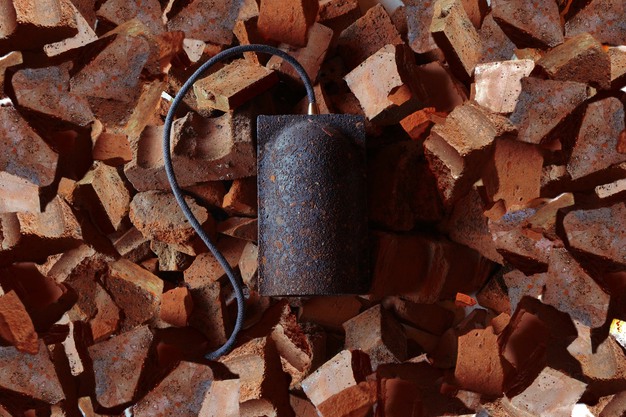 © AlkalineAlkaline Wayst pendant light.
Pronounced "waste", WAYST begins with fragments typically destined for landfill: rubble from demolition sites, wall remnants from renovations, and offcuts from industrial processes. Rather than treating these materials as end-of-life, the Makins reposition them as raw potential. Through casting, shaping and careful design, these fragments are transformed into functional objects that retain the narrative of their origins.
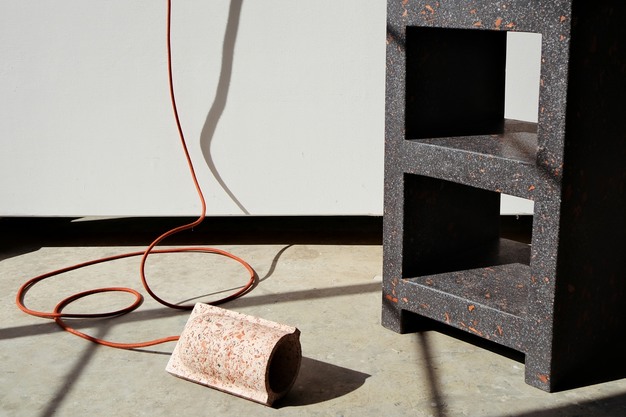
The collection's first pendant lamp is cast from crushed brick reclaimed from local demolition sites. Its textured surface makes the material's provenance immediately visible, while its refined form situates it firmly within contemporary interior contexts. The object embodies Alkaline's approach of allowing material history to inform both aesthetic and meaning.
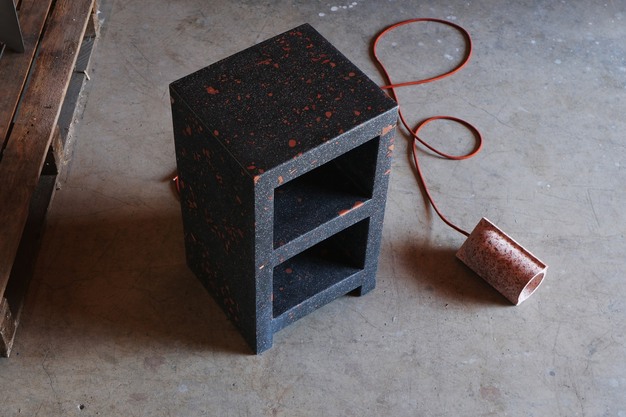 © AlkalineAlkaline Wayste side table.
Wayst also includes a limited-edition side table developed in collaboration with Cape Town-based design and fabrication studio The Minimalist. The piece pairs terrazzo slabs cast by Alkaline from salvaged brick waste with a raw stainless steel base fabricated by The Minimalist. Measuring 345 x 350 x 600mm, the table brings together steel, one of the most widely recycled materials globally, with construction rubble, a material more often overlooked. The resulting object is tactile, restrained and quietly expressive.
The collection challenges traditional notions of luxury by elevating materials that are usually unseen or undervalued. In doing so, it positions sustainability not as an aesthetic layer, but as an inherent design principle rooted in process, collaboration and intent.
"Demolition sites are often where materials go to die," says Andrew. "But what if they became supply chains for design?"
Beyond individual objects, Wayst addresses waste management at scale. Alkaline aims to collaborate directly with demolition companies, builders and contractors, particularly within hotel and commercial projects, intercepting materials before they reach landfill. The studio seeks to preserve the memory embedded in materials, translating previous use into contemporary design while maintaining structural and functional integrity.
 © Alkaline
As an evolving project, Wayst remains open to new materials, collaborations and custom commissions. Architectural remnants from family homes, historic buildings or meaningful renovations can be carried forward into objects designed for daily use, sustainable keepsakes that merge personal history with purposeful design.
Alkaline will exhibit at the annual Cape Town Furniture Week exhibition, taking place from 18 to 21 February 2026. The programme is free to attend and spans more than 50 locations across multiple districts, anchored by a central Festival Hub. This part of the exhibition is open to the public, with no tickets required.
About Alkaline
Founded in 2021 by Chelsea Makin and joined in 2024 by Andrew Makin, Alkaline is a South African design studio based in KwaZulu-Natal. The studio produces contemporary homeware that blends sculptural form with functionality, working with materials including concrete, resin, gypsum and salvaged construction debris.
More information:
Alkaline
[email protected]
www.alkaline-shop.com