


When Berlin Acoustics entered the market in 2022, the open-plan office was already under scrutiny. Designed to encourage collaboration and transparency, many such spaces had quietly failed at something more basic: allowing people to concentrate. According to Brand Director Yvonne Bartmer, the gap was obvious. Open offices, she explains, often ignore the human need for peace, spaces where people can "truly focus or connect in quiet, without distraction." Berlin Acoustics was founded with a clear aim: to make focus accessible in the modern workplace.
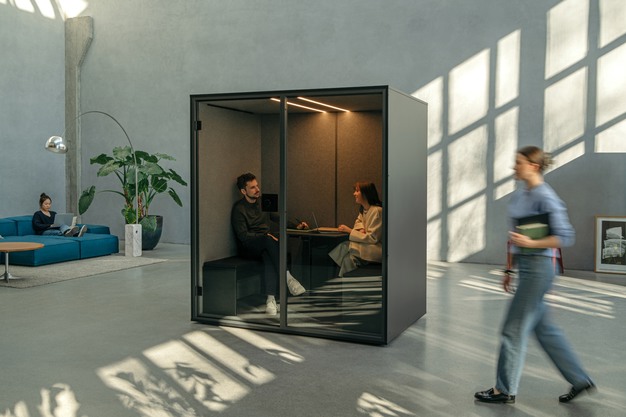
Rather than adding visual noise to already busy interiors, the company took a deliberately restrained approach. Existing acoustic booths, Bartmer notes, tended to be either prohibitively expensive or overly complex. Berlin Acoustics responded with minimalist, architect-friendly designs intended to blend into offices rather than dominate them, creating calm without compromising aesthetics.
 © Berlin Acoutics
Minimalism as long-term principle
While minimalism has become a popular design trend, Berlin Acoustics insists its approach goes deeper. Bartmer is clear that simplicity is not a styling exercise but a long-term philosophy. The goal, she says, is not to chase fashion but to "build what lasts," designing booths that integrate seamlessly into a wide range of architectural contexts.
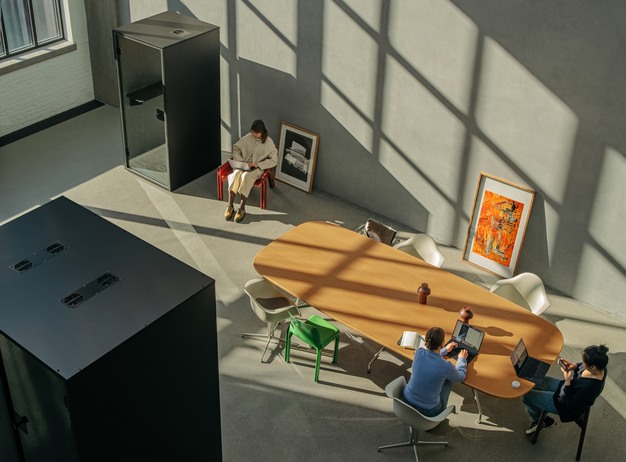
This clarity of design has practical benefits as well. By focusing on timeless forms and standardized components, Berlin Acoustics can maintain consistent quality, streamline production, and keep prices accessible. It is one reason, Bartmer explains, why architects and planners respond positively: the booths "leave space for their vision to breathe," rather than competing with it.
 © Berlin Acoutics
Sustainability, local production and control
Sustainability is another pillar of the brand, though Bartmer is cautious about treating it as a selling point. In her view, sustainable production should be the baseline, not a differentiator. Still, Berlin Acoustics goes beyond minimum requirements, sourcing over 90 percent of its materials locally in Germany and producing all booths across three domestic facilities.
This regional approach has proven particularly valuable during recent supply-chain disruptions. Bartmer points out that local sourcing reduces dependency on volatile global networks, shortens lead times, and improves quality control. It also allows the company to stand by its "made in Germany" promise as it grows, without diluting standards.
The modular design of the booths further supports this commitment, reducing waste while increasing flexibility. With its "One Booth – One Tree" initiative, Berlin Acoustics extends sustainability beyond production, replanting trees in the same country where manufacturing takes place.
 © Berlin Acoutics
Future of focus
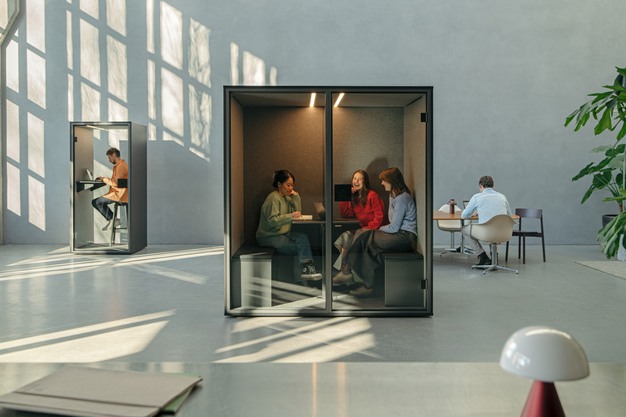
As hybrid and flexible working models continue to reshape offices, Berlin Acoustics sees growing demand for spaces that support different modes of work. Offices, Bartmer says, are becoming less about fixed desks and more about moments, focus, collaboration, retreat. Acoustic booths, in this context, are not isolating structures but tools that offer choice. Interestingly, many clients report that collaboration improves when employees know they can step away for quiet when needed.
Despite concerns about market saturation, Bartmer remains confident. The need for focus, she argues, is not disappearing but evolving. As offices become smaller and more flexible, compact, multi-use solutions like acoustic booths are increasingly seen not as luxuries, but as essential building blocks of the modern workplace.
More information:
Berlin Acoustics
[email protected]
en.berlin-acoustics.com