

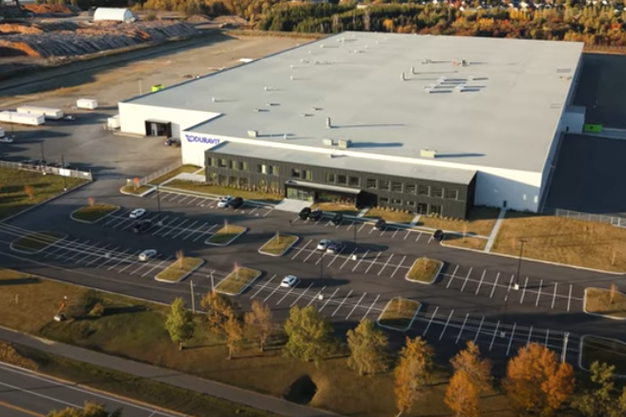
Duravit has inaugurated a groundbreaking step in sustainable sanitary production with its new ceramics facility in Matane, Québec, Canada, where kilns are powered 99.6% by renewable electricity from hydroelectric sources. The 35,000-square-metre plant, producing up to 450,000 ceramic items annually, positions Duravit as a pioneer in environmentally responsible ceramics manufacturing.
 © Duravit
The facility utilises electricity supplied by Hydro-Québec and sources all raw materials locally from Canada and the US, reducing transport distances and sustainable logistics. Duravit estimates that the electric kilns and shorter supply chains can save up to 9,000 tons of CO₂ annually, contributing directly to the company's goal of achieving carbon neutrality by 2045.
In addition to environmental innovation, the Matane plant supports Duravit's "local for local" strategy, producing ceramic parts specifically for the North American market. By reducing reliance on imports from Europe, the facility decreases CO₂ emissions by approximately 1,500 tons per year.
Duravit's production processes follow the principles of Industry 4.0, with high automation enabling efficient and precise operations. Christian Gilles, previously head of production at Duravit's Hornberg and Bischwiller plants, has been appointed CEO of the new Canadian facility to oversee its sustainable operations.
The project also demonstrates Duravit's social responsibility, creating 240 jobs for skilled specialists and generating economic benefits for local suppliers. Stephan Tahy, CEO of Duravit, commented, "We are very proud to be a pioneer in the sustainable sanitation industry and to provide answers to the challenges of climate change. In doing so, we are setting standards for innovative solutions in an industry characterized by high energy consumption. At the same time, the new plant is a milestone on our path to climate neutrality by 2045."
Duravit has already unveiled its first carbon-neutrally fired toilet, manufactured at the Matane facility and showcased at international design events such as the BDNY in New York. This innovation highlights how cutting-edge sustainability can be seamlessly integrated with premium design.
With its Matane facility, Duravit is demonstrating that environmental responsibility, industrial excellence, and social impact can co-exist, offering a blueprint for the future of the sanitary industry.
More information:
Duravit
www.duravit.com