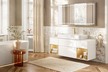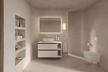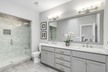


The National Kitchen & Bath Association (NKBA) | KBIS has released its 2026 Bath Trends Report, drawing on data from a survey of nearly 700 industry experts including designers, manufacturers, remodelers and architects. The report offers a comprehensive look at current and upcoming trends in residential bathrooms that are set to have the biggest impact in 2026 and beyond.
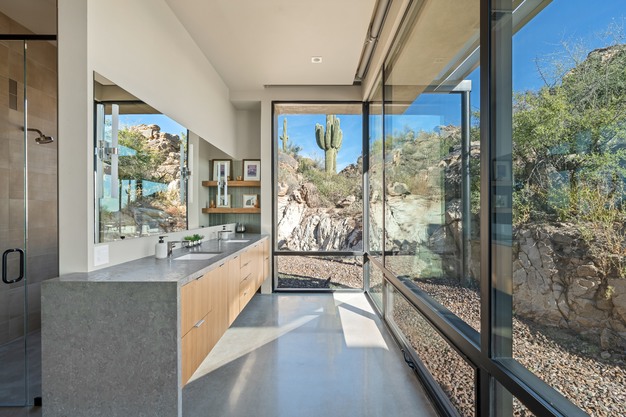 © NKBA
According to the report, "the bath design landscape is currently in a state of flux – the evolution bathroom technology marks an upcoming shift in the home." As residential tech continues to present more opportunity and innovation, three areas of growth stand out in in bath:
- Technology in Design Inspiration: Younger homeowners are turning to AI for design inspiration that integrates smart features, sustainability and style.
- Technology in Fixtures: Smart‑home integration is expanding rapidly through intelligent showers, lighting and energy systems.
- Technology for Wellness: Health‑oriented features, stress‑reduction tools, and aging‑in‑place innovations are becoming mainstream.
Beyond technology, personalised tastes and lifestyles are described as "continuing to be the driving force behind colour, style, and materials selection, as well as storage configurations and bath layout."
"Bath design is becoming deeply personal," says Bill Darcy, Global President & CEO of NKBA | KBIS. "Beyond considerations like resale value, designers are focusing on how spaces support a homeowner's individual rituals, preferences, and self‑care routines. This perspective encourages creativity, niche trends, and designs that truly reflect how people live today."
Key design and material findings
- Colour & Materials: Light neutrals dominate, with 96 % of respondents identifying neutrals as the most popular bath colour palette. Off‑white (58 %), light brown/tan (54 %) and white (40 %) lead over dark brown (30 %), black (18 %) and dark grey/slate (18 %).
- Shades of green are also expected to rise: brown‑based greens such as sage (64 %) and olive (43 %) are favoured, while bolder hues like teal/turquoise (19 %) and emerald/juniper (16 %) attract less attention.
- Timeless Design: A "transitional/timeless" aesthetic tops the list, cited by 70 % of respondents. Other strong styles include organic/natural (65 %) and contemporary/modern/minimalist (57 %).
- Durability & Practicality: 89 % of survey participants agree that homeowners are looking for smaller or no grout lines on the floor, and 91 % say that durability and practicality are top considerations when choosing a flooring material. Wood‑faced vanities (62 %) have overtaken painted styles (53%) in popularity.
- Lighting Matters: Light quality is a top consideration for 91 % of respondents. Among lighting priorities: 92 % agree that task lighting should always be included in the primary bath; 51 % expect mood lighting in the shower to gain prominence; 80 % include night‑time specific lighting; 88 % list natural lighting as a top priority; and 47 % favour integrated lighting in mirrors over the next three years.
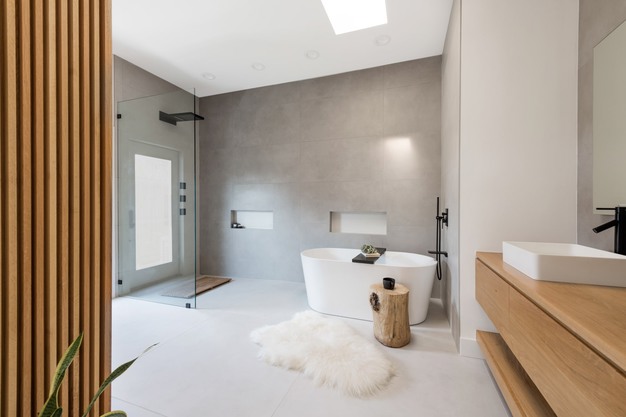 © NKBA
Growth of wellness‑centred bath footprints
The overall bath footprint is evolving: 72 % of respondents anticipate an increase in space for wellness‑centred zones, universal design considerations and efficient storage solutions, while 89 % regard the spa location in the primary bath as a top priority. More than half (55 %) believe a larger shower size is more important than having a bath tub, allowing space for more spa‑like features and amenities such as steam options, saunas, aromatherapy, integrated seating and shelving. Hospitality inspiration for wellness tying bath design to a homeowner's hotel or resort experience is expected to become popular, according to 77 % of respondents. "It's not about one individual feature like a smart toilet… instead it's a fundamental shift in how we perceive and use the primary bathroom. It's moving from a purely utilitarian space to a sanctuary dedicated to physical and mental well‑being, while also being smart and environmentally conscious," the report states.
Bespoke living & smart storage
Custom bath solutions are on a growing scale, with smart technology being integrated to achieve more individualised daily ritual and as a tool to impact overall well‑being. Storage solutions with configurable modules to simplify life are being thoughtfully integrated into bath vanity and cabinetry design. Item‑specific storage for hair tools, makeup, and medications, electronic integration, custom dividers and organisers to maximise drawer efficiency, and charging stations for electronic devices within vanity cabinetry are all increasing. Paired with personalised style inspiration, these considerations represent a deep shift towards bespoke living.
Customisation, ageing‑in‑place design elements and accessibility have become mainstream. Grab bars, curbless showers, shower benches, barrier‑free shower entries and wider doors are subtle yet crucial safety features that make a primary bath look more luxurious and elevated. 32 % of those surveyed agree that ageing‑in‑place is now a mainstream trend and 48 % agree that it's on its way to becoming one.
More information:
NKBA
www.nkba.org