


'Most interior companies want to become more sustainable,' says Stijn Scheepers, Director Benelux at osapiens, 'but they get entangled in the complexity of their supplier network. They often don't know exactly where their wood, fabrics, or coatings come from, and that makes reporting difficult.'
That challenge does not stand alone. These raw material requirements specifically relate to the EUDR, the European Deforestation Regulation, which will come into effect at the end of December. Raw materials covered by the EUDR include cattle, palm oil, soy, cocoa, coffee, rubber, and wood. It also applies to certain derived products, such as leather, chocolate, and furniture. In addition, interior companies are dealing with other European regulations such as the CSRD and CSDDD.
Sustainability is therefore no longer a choice but a requirement. Companies that cannot make their supply chain transparent risk fines, reputational damage, or even exclusion from international trade networks. This sense of urgency is increasingly felt within the interior design industry as well. From furniture manufacturers to upholsterers: everyone is becoming part of a chain in which sustainability is not just a promise, but something that must be measurable and verifiable.
 © osapiens
Stijn Scheepers, Director Benelux osapiens
Complexity calls for digitalisation
The new legislation makes companies responsible for their entire supply chain. This means having insight into every link; from raw material to finished product. 'The idea is good,' says Stijn. 'In practice, it's extremely difficult. Suppliers operate worldwide, data is fragmented, and there is no uniform standard.'
That is precisely why digitalisation is becoming indispensable. osapiens, a German software company specialising in ESG and compliance solutions, helps organisations make their value chains more transparent and efficient, while also ensuring regulatory compliance. The company has developed a platform that automates this process. 'We help companies collect, verify, and report sustainability data from their entire supply chain,' Stijn explains. 'Our modules provide insight into where materials come from, whether suppliers meet certification requirements, and what the total CO₂ impact of production is.'
The platform is modular and integrates with existing ERP or production systems, allowing companies to digitalise step by step without disrupting their daily operations. 'A clear overview emerges in a short time,' says Stijn. 'Companies immediately see where the risks lie and how they can improve their reporting.'
 © osapiens
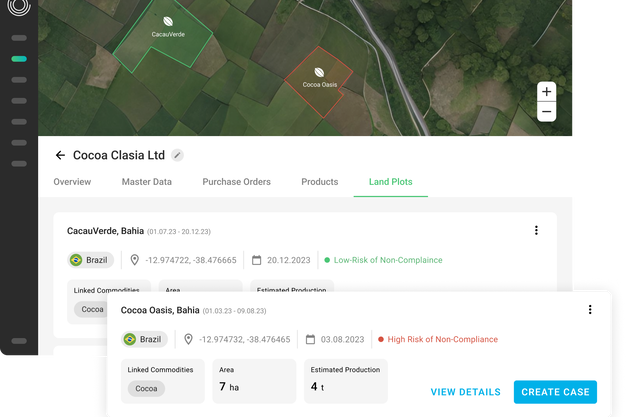
Landplot showing Non-Compliance
From cost item to competitive advantage
Although many companies still view ESG compliance as a cost item, Stijn emphasises that it is actually an opportunity to work more efficiently and profitably. 'Once processes are digitalised, you start seeing patterns. You discover waste, duplicate administration, and unnecessary steps. That leads directly to savings. In addition, customer trust grows. Transparency sells.'
He mentions a concrete example of a Benelux manufacturer who centralised its supplier data through osapiens. 'Within three months, the reporting process became three times faster, and they were able to demonstrate that the entire chain was fully traceable. That not only provided assurance to auditors but also a strong commercial advantage in tenders.'
 © osapiens
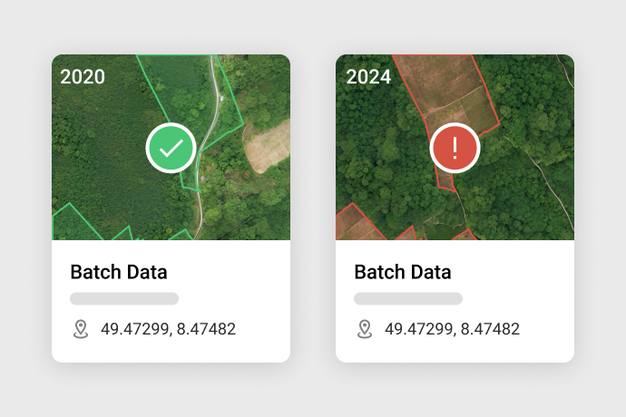
Deforestation Analysis
First steps toward transparency
For interior companies that want to start today, Stijn advises three practical steps:
Map your supply chain. Make sure you know exactly who your suppliers are and what materials they use. Only then can you get a grip on your sustainability obligations.
Gather basic information. Start small by collecting, for example, certifications and material data. This way, you gradually build a reliable data foundation.
Digitalise step by step. Consolidate your data in one digital system for better overview and consistency. This makes it easier to comply with laws and regulations and helps prevent errors.
'Those who start with transparency today will be ready for the future tomorrow,' concludes Stijn. 'Sustainability is no longer a buzzword, but the foundation of trust and quality. And with the right digital tools, that transformation doesn't become a burden, but an opportunity to become stronger than ever.'
More information:
osapiens
[email protected]
www.osapiens.com
+49 621 15020690