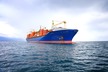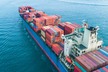


Negotiations with shipping lines for the 2026 annual contracts are back in full swing. In this interview, CCO Marc van Haaren of digital forwarder Shypple gives his insights on the shipping lines' current role in the market, the balance between capacity and rates, and expectations for 2026.
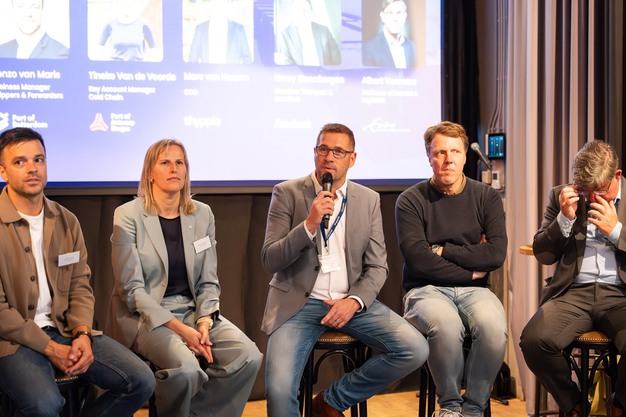 © Izak Heijboer | InteriorDaily.com
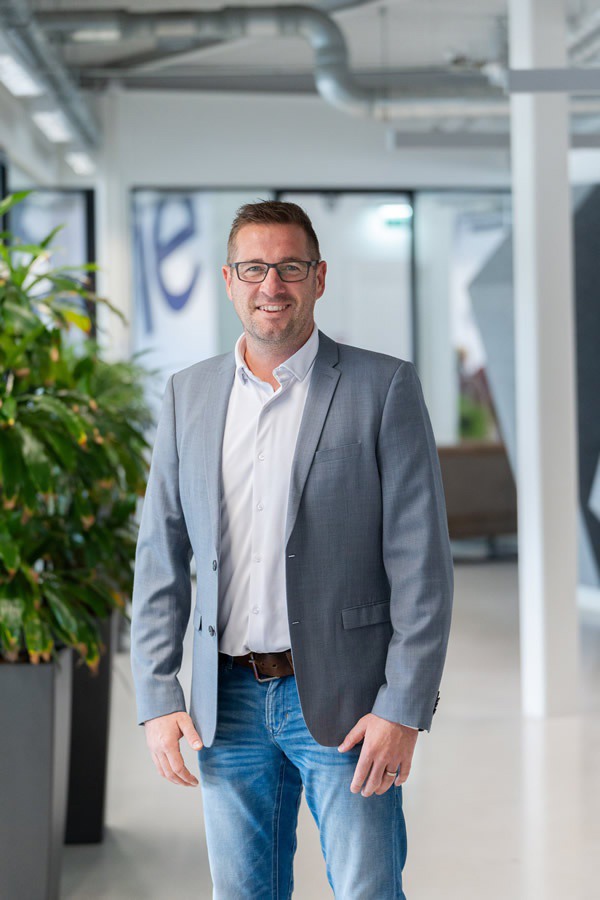
According to Marc, the situation in ocean freight this year is not even that much different from past years. "If you exclude Covid, because that was quite extreme, you have always had to deal with fluctuations in sea freight. The biggest fluctuations continue to be seen on the lines from Asia and North America to Europe. However, Trump's import duties had a big impact this year. Then customers immediately became searching or declared a halt to their cargo flows to wait and see how the situation was going to develop."
Asked about the available capacity, Van Haaren said there is plenty of space available on ships and many shipping companies have also invested in additional vessels, which means there will be more supply in service again next year. "As a result, supply and demand actually seem a bit more balanced. Shipping companies have become a lot smarter since Covid and are balancing supply in a more controlled way through black sailings, artificially taking a piece of allocation out of the market."
 © Izak Heijboer | InteriorDaily.com
Rates
Asked how Marc assesses current ocean freight rates, he replies, "As Shypple, we have large flows from Asia and from Central America to Europe. For the latter trade flows, the CES service will go out from 1 January. This is going to have a big impact for the plant sector, melons and pineapples in particular, so we are looking with the shipping lines for the puzzle that needs to be put in place. The market has been fairly stable over the last two years, but now that a service is going out, the expectation is that supply and demand will become more imbalanced and rates do start to rise, so for the next few weeks it will be exciting how that will be reflected in rates."
"The market for ocean freight from the East to Europe is always a bit more volatile. Supply and demand are just a bit less balanced here. So shipping companies will again try to artificially raise rates. We saw a peak in mid-2025 and then prices fell sharply again. Now they are trying to jack up rates again and are mainly driven by the annual rates that are now being negotiated. At the Shypple Event at Hotel New York in September, I expressed the expectation that the market was heading towards a certain level and you can see that it is now moving in that direction as well."
Red Sea route
With a peace agreement in the Middle East, a passage through the Red Sea Route also seems increasingly within reach. Asked if the Shypple-CCO expects any change in sea routes soon, he replied, "Not soon, but you can see by now that CMA CGM has opened routes to the Mediterranean from the Middle East. Last week the news also came out that they are going to Europe with two new routes from the Far East. At the same time, I always keep a bit of a guard up. After all, we often see in our track-and-trace that a ship is indicated as passing through the Red Sea, but still ends up going via the Cape of Good Hope. But now that the situation in the Middle East seems to be calming down, the Red Sea would in all likelihood be a more passable route next year. However, shipping companies will have to look closely at each other, so that it will not cause huge disruptions in all ports, because you will get multiple ships in European ports at once. As for the congestion that this could cause, we will all have to be careful."
Unique proposition for the fresh market
After seventeen years working for various shipping companies - including commercial responsibility for the Benelux within Hapag Lloyd - Marc made the switch to the other side of the negotiating table five years ago. "Six years back I would have told you that the forwarder profession would go out, but I have come back from that. Every customer needs a forwarder. Thereby, with our platform combined with our service, we have a unique proposition for the fresh market. As soon as a container hits the terminal, you see it on our platform. Uniquely, we designed this whole digital way of working ourselves. That is paying off."
"We saw this at the Fruit Attraction in Madrid, for example. Roughly three years ago, we were still mainly explaining what we did, but now we are increasingly seen as an indispensable link by our customers and partners. Personally, I particularly like having my feet in the clay and really unburdening the customer. A large shipping company also wants to be service-oriented, but often can't because of its scale. We do everything for a customer who imports five containers a month and we provide them with information on all sides. If a customer arrives with big Excel sheets, we get excited!"
 © Izak Heijboer | InteriorDaily.com
Port of Rotterdam position
Meanwhile, Shypple has also made the expansion into the German market. "For us, this was a very natural exercise. After all, we have quite a lot of customers who come in via Rotterdam or Antwerp as 'first port of call' and whom we pass on to Germany. This is where we would like to hook up further with our existing German customers on the one hand, but we would also like to continue to grow and this is actually going quite well." According to Marc, the port of Rotterdam must be careful not to lose its position. "If you look at the speed of handling, I think Antwerp is already a bit ahead in certain areas. With the lashers' strike recently, the entire port of Rotterdam was immediately jammed again. Now you actually see that recurring every year when the collective labour agreement is negotiated, but they will really have to make strides in that!"
For more information:
Shypple
[email protected] 
www.shypple.com/perishables