


Europe is entering a new phase of economic challenge, with increased Chinese competition—both at home and in third markets, putting pressure on key industries and national competitiveness. Economists at ING describe this as a "China shock 2.0," a largely negative iteration of the trade phenomenon that initially boosted European manufacturing in the 2000s.
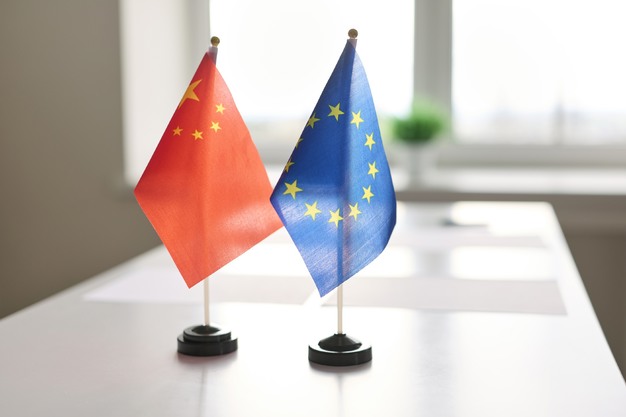 © Lacheev | Dreamstime
During the first China shock, European exporters, particularly German industrial companies, benefited from robust Chinese demand for machinery, vehicles, and high-value manufactured goods. This surge in exports helped mask domestic structural weaknesses and reinforced Europe's position in global manufacturing. Today, however, the landscape has shifted: China has become a formidable global competitor, producing high-quality goods at lower costs while also expanding its market presence internationally.
The report highlights several factors driving this new wave of competition. China's overcapacity in sectors such as automotive, chemicals, electronics, and non-metallic minerals has resulted in surplus production, which is increasingly reaching European markets. Coupled with a slowing domestic Chinese economy and barriers to entering the U.S. market, European manufacturers face heightened competition both at home and abroad. Notably, eurozone exports to China have declined by over 25% since February 2023, while Chinese imports to Europe are rising, particularly in autos, chemicals, and pharmaceuticals.
Price competition is also intensifying. ING notes that European import prices from China have fallen approximately 15% year-on-year in 2025, compared to a modest 2.2% average decline in import prices overall. This suggests that Chinese exporters are leveraging lower costs and favourable currency movements, the renminbi's devaluation against the euro, to increase competitiveness.
The impact is uneven across Europe. Countries with strong industrial sectors and high exposure to Chinese imports, such as Germany, the Netherlands, and Ireland, are particularly vulnerable. Industries most at risk include automobiles, chemicals, and pharmaceuticals, sectors where Europe has historically held strategic strength but now faces declining domestic competitiveness.
While some may welcome the disinflationary benefits of cheaper imports, the broader consequences are politically and socially significant, raising questions about job security, industrial autonomy, and strategic resilience. ING concludes that Europe must reckon with the long-term implications of China's rise as a global competitor, balancing efficiency gains against vulnerabilities in critical industries.
This second China shock, unlike the first, is expected to be slower and more localized, but its effects on strategic sectors could be profound, making it a defining challenge for Europe's economic policymakers in the years ahead.
More information:
ING
www.think.ing.com