

Founded in 1716 as a wholesaler of ramie fabrics known as Nara-sarashi, Nakagawa has evolved through shifting social and economic contexts while maintaining its connection to Japanese heritage craft. The disappearance of the samurai class during the Meiji Restoration caused a collapse in demand for Nara-sarashi, forcing the company to diversify. 'The 9th-generation head, Masashichi Nakagawa, safeguarded quality while developing sweat cloths and baby garments, opening up new markets,' the company explains. By 1985, Nakagawa had launched a gallery shop selling daily goods from processed ramie fabrics, which became the foundation of its current lifestyle business.
 © Nakagawa
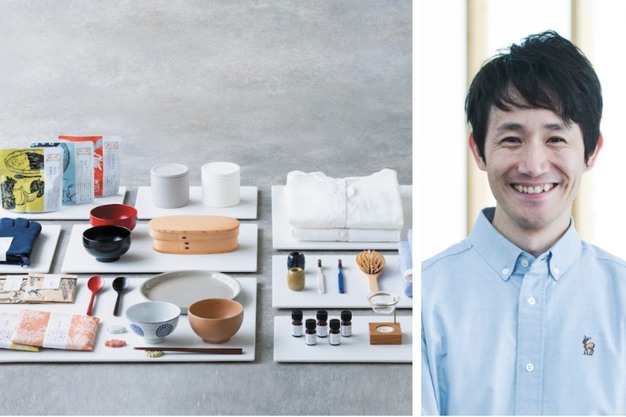
Nakagawa brand offerings (left) with Vice President Mr.Tasuku Ogino (right).
Integrated model and collaborations
Nakagawa describes its strength as rooted in the vision of "Revitalising Japanese Craft!" This includes collaboration with over 800 craft manufacturers across Japan. 'Guided by our vision, we have consistently taken actions that may appear disadvantageous to us in the short term but that, in the long term, revitalise makers and the craft industry,' the company states.
The business model spans product planning, manufacturing, and retail. About 15 in-house designers create 200 new items each season in collaboration with craft makers. At the retail level, store staff communicate artisans' stories directly to consumers, often supported by visits to production sites.
 © Nakagawa
Preservation through transformation
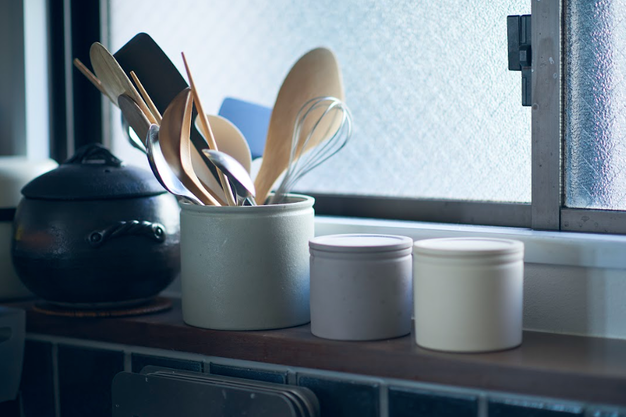
Nakagawa positions its approach as "preservation through transformation," anchored in five values: materials and techniques, culture and customs, design, society and economy, and people and living. 'From this starting point, we explore the essence of each craft and technique, protect that essence, and innovate to adapt it to today's way of living,' the company notes.
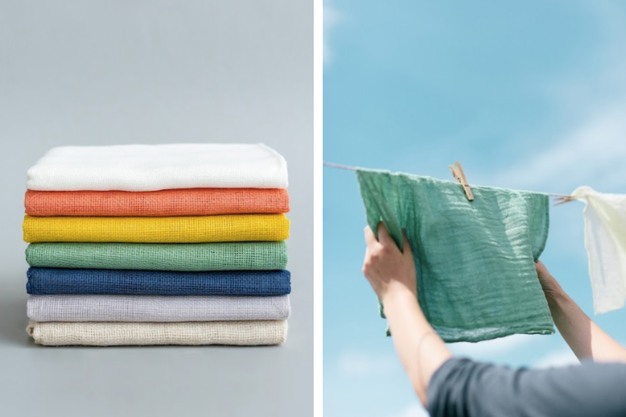
The Hana-Fukin dishcloth, introduced in 1995, exemplifies this approach. Made from mosquito-net fabric once produced in Nara, it has sold more than 21 million units. For the London pop-up, Nakagawa released a special edition inspired by the Columbia Road Flower Market.
 © Nakagawa
Entering the European market
Nakagawa has staged pop-ups in Taipei, Shanghai, Beijing, and Seoul before opening in London. 'Europe's coexistence of tradition and innovation, its respect for craftsmanship, and its minimalist aesthetic rooted in natural materials resonate strongly with Nakagawa's philosophy,' the company says.
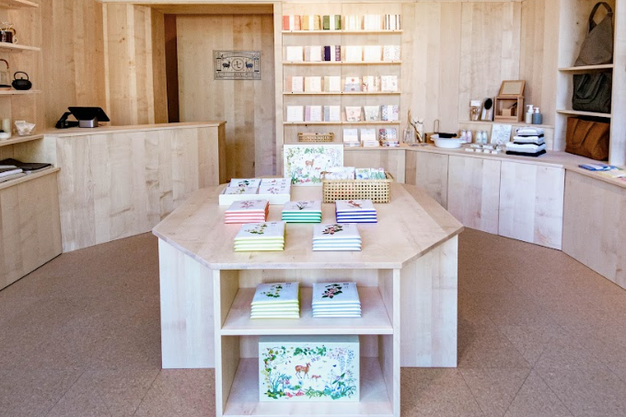
Shoreditch was chosen as the entry point for Europe, with the store design referencing the Boundary Estate bandstand and featuring locally sourced London sycamore. Nakagawa frames the London store as a test to 'understand what products resonate and how they are used, in order to shape our path for future development in the UK and Europe.'
Long-term outlook
Beyond London, Nakagawa aims to expand across Europe with pop-ups and permanent stores. 'By 2030, we aim to establish an overseas flagship store,' the company states. The strategy balances market entry with a focus on sustaining the craftspeople at the centre of its supply chain.
Nakagawa London pop-up store
Open: 9 September 2025 – July 2026
Location: 16c Calvert Avenue, Shoreditch, London E2 7JP
Opening hours: Tuesday–Saturday 11:00–18:00, Sunday 11:00-17:00
Items: Approx. 500 items including homeware, ceramics, clothing, and kitchenware
Space Design & Fabrication: Jones Neville
 © Nakagawa
Nakagawa London pop-up store.
More information:
Nakagawa
Instagram: @nakagawa1716_global
www.nakagawa1716.com