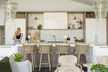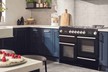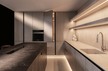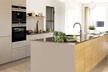

The German kitchen furniture industry is showing signs of stabilisation after two years of decline. According to official statistics, manufacturers generated around €3.3 billion in sales during the first seven months of 2025, just 1.2% below the previous year. In July alone, sales increased by nearly 5% to €428 million.
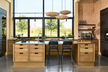
 © Tommygunzgrafix | Dreamstime
"After the sales declines in the past two years, we are now seeing signs of recovery, even though the market environment remains challenging," said Jan Kurth, Managing Director of the Association of the German Kitchen Furniture Industry (VdDK), at the annual economic press conference in Löhne.
Order intake between January and August was up 2.6% year-on-year. Domestic sales stood at €1.8 billion (down 1.4%), while export sales reached €1.5 billion (down 1%). With an export quota of 46%, the kitchen furniture sector remains more internationally focused than the German furniture industry overall (34%).
Across Europe, results were mixed. Exports to France, the largest market, fell 4.3% to €337 million. Declines were also seen in Belgium (–0.9%), the UK (–0.1%) and the Czech Republic (–3.7%). Growth was achieved in the Netherlands (+6.6%), Austria (+2%), Switzerland (+4%) and Spain (+10.9%), where housing construction is currently strong.
Outside Europe, exports dropped sharply. Deliveries to China fell 26.6% to €28 million, with Kurth noting: "Competition in the Chinese market has intensified considerably against the backdrop of a weakening economic environment. Both private consumption and the construction sector remain under pressure." Exports to the United States decreased by 17.4% to €26 million, impacted by new US tariffs of 15% on EU imports introduced in August. Around 80% of companies surveyed expect further declines in exports to the US, though most intend to maintain their investment in the market.
The sector also faces growing regulatory and bureaucratic burdens, particularly from the EU Deforestation Regulation (EUDR), which takes effect in December 2025. Companies estimate both implementation and ongoing costs in the six-figure range, with nearly 60% doubting they can meet the deadline. Kurth stated: "We urgently call on the EU Commission to simplify the requirements and reduce the unreasonable burden, particularly for medium-sized companies."
Despite these challenges, the industry continues to invest in sustainability. Efforts include sourcing certified wood, using renewable energy, recycling production waste, and trialling circular projects such as Furniture – Material Re:Turn, launched in May 2025 to recover raw materials from used kitchens in North Rhine-Westphalia.
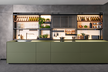
For 2025 as a whole, the VdDK forecasts sales of around €5.6 billion, in line with last year. Rising household incomes, government housing initiatives and continued consumer investment in the home are expected to provide cautious optimism. Current design trends include warm beige and green tones, ribbed cabinet fronts, and the Japandi style, blending Japanese and Scandinavian influences.
More information:
die möbelindustrie - Verbände der deutschen Möbelindustrie
www.moebelindustrie.de