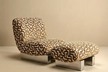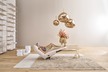


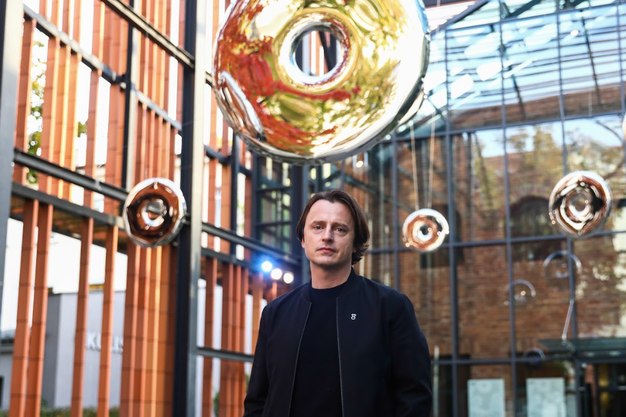
Oskar Zięta, CEO and founder of Zieta Studio and Ultre Mobility, has redefined the possibilities of metal. From his early fascination with his grandfather's blacksmithing tools to pioneering inflatable steel structures, his journey blends tradition, innovation, and sustainability. InteriorDaily sat down with Zięta to talk about his philosophy, his studio's groundbreaking FiDU technology, and what's next for his expanding universe of design.
 © Zieta Studio
Oskar Zięta, CEO and founder of Zieta Studio and Ultre Mobility.
Can you share the story of how Zieta Studio started and the vision that drives your work today?
'My fascination with metal began in my grandfather's blacksmith workshop. Watching him transform shapeless material into functional forms fascinated me, and that sense of transformation still drives my work. I see myself as a "blacksmith 4.0." My grandfather used a hammer; today we form metal with information. At Zieta Studio, our philosophy is based on reduction, less material, less energy, less weight, creating ultralight solutions designed to last.'
Zieta Studio is known for its unique approach. What makes your process distinctive?
'Our expertise lies in metal and its transformation. We developed FiDU technology, free inner pressure forming, which allows us to inflate steel sheets into three-dimensional objects. We laser-cut, weld, and then inflate with air. Some deformations we control, but many are left to the material itself. Those "errors" give each piece its fluid, organic individuality, something impossible to design manually.'
 © Zieta Studio
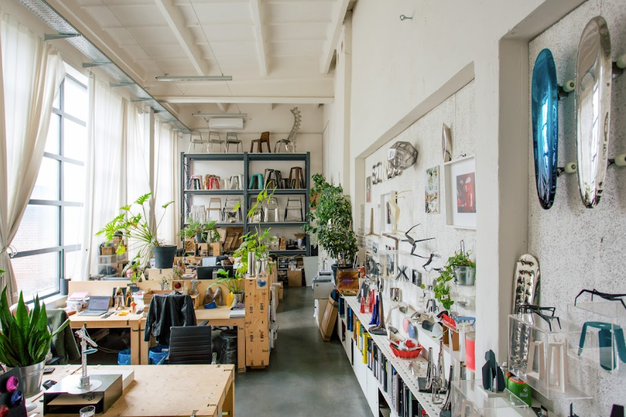
The Zieta Studio.
What values guide your design process from concept to production?
'Minimalism is central, both in form and in material use. We believe in an ultralight, monomaterial future. Every project is conceived with resource efficiency in mind, from digital models to the final object. We keep our entire process in-house, giving us full control over material, energy, and quality. It's both high-tech and artisanal, like riding a bike, once you know the rhythm, intuition leads the way.'
Your FiDU technology has gained international recognition. How did innovation shape its development?
'FiDU began as my PhD at ETH Zurich. At the time, critics dismissed my experiments as "scrap metal." But I saw potential in what others called errors. With support from mentors and the Swiss education system, I kept pushing. Over time, FiDU proved capable of creating ultralight structures adaptable to countless forms. Today it's central to our work and continues to open new frontiers.'
In a competitive market, what sets Zieta Studio apart?
'We are more than a design studio, we're a hybrid of research, development, and production. With 70 people under one roof, we combine digital simulations with physical experimentation. We don't just follow textbooks, we write our own alphabet of design. This lets us think beyond interiors. I'm convinced our inflatable profiles will one day be used in space.'
How have you seen client expectations evolve?
'Sustainability and durability are no longer niche, they're becoming the standard. Clients want products that are both responsible and long-lasting. Customisation has also grown. Our site-specific installations, like Whispers for the London Festival of Architecture, show how our process can scale from intimate furniture to monumental public art.'
What can visitors expect from you at Decorex this year?
'Alongside icons like the Plopp stool and Ultraleggera chair, we'll debut new directions, including Zieta Lighting with the Harmonica floor lamp, and the Echo table, born from our sculptural experiments. It's a continuation of our exploration of how inflated steel can surprise.'
 © Zieta Studio
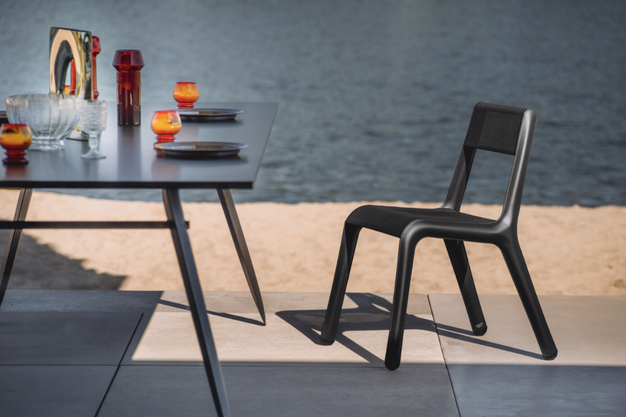
The Ultraleggera chair from Zieta Studio. Photographed by Jakub Musialski and space designed by Aldona Banasiuk.
And what's next for Zieta Studio?
'We're venturing beyond interiors into mobility with Ultre Mobility. This year we introduced the Ultre 4 Cargo™, a vehicle designed for last-mile urban delivery using FiDU technology. It's just the beginning, we're also prototyping other models. And yes, I still dream of space. One day, I believe FiDU will play a role there too.'
Through Zięta's eyes, steel is not heavy or rigid, it's alive, light, and full of potential. By embracing transformation, imperfection, and reduction, Zieta Studio is forging a future where design is not just functional, but visionary.
More information:
Zieta Studio
ul. Stanisława Moniuszki 29/2
51-610 Wrocław
+48695232067
[email protected]
www.zieta.pl
Poland