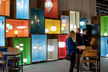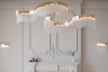


Secto Design was founded 30 years ago by Tuula Jusélius, emerging from a period of professional and personal transition. Previously a financial journalist, she partnered with Seppo Koho, at the time a recent graduate from the University of Art and Design Helsinki, to develop minimalist, wooden furniture for both private and public interiors. 'Our first furniture line was made of solid wood and manufactured in small workshops across Southern Finland,' Tuula Jusélius explains.
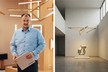
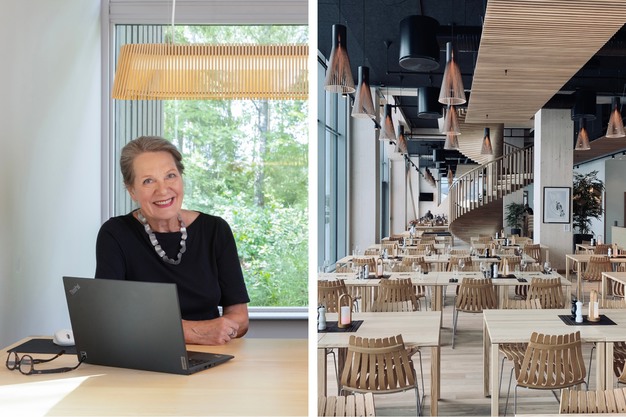 © Secto Design | Voll Arkitekter.Tuula Jusélius, founder and Creative Director of Secto Design (left) and Wood Hotel, Mjøstårnet, in Brumunddal, Norway. Photo by Voll Arkitekter (right).
As client interest shifted toward lighting, Koho experimented with wooden slats to conceal light sources while diffusing illumination. This approach formed the basis of Secto Design's current range of pendants, wall, and table lamps. By 2002, the company fully transitioned to lighting, with Tuula Jusélius dedicating her work exclusively to the new focus. Today, Secto Design is owned by her son, Joakim Jusélius, who oversees production in Heinola, Finland, while Tuula continues to lead the creative direction of the brand.
Signature characteristics
Secto Design lamps are defined by graphic forms created from birch plywood slats. The light source is concealed, producing filtered illumination with a controlled, warm quality. Tuula Jusélius highlights the balance of design elements: 'It's this interplay of form, material, and atmosphere that gives Secto Design lamps their unmistakable character.' This consistent design language is applied across residential, hospitality, and commercial projects, shaping interiors without dominating them.
Production and sustainability
Local production is central to the brand. Sourcing PEFC-certified birch from Finland allows the company to maintain traceability and material quality. Secto Design has performed a detailed life cycle assessment across its production chain, resulting in Environmental Product Declarations (EPDs) for more than half of its products. 'High-quality, knot-free birch is most reliably sourced from Finland, and having our factory nearby means that every step of production is literally 'in our hands,' Tuula Jusélius notes.
The factory operates with a focus on clean processes, seamless organisation, and traceability, reflecting both sustainability and craft standards. Repair and maintenance services are provided to extend product life, aligning with expectations for circularity in interiors.
 © Secto Design
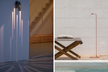
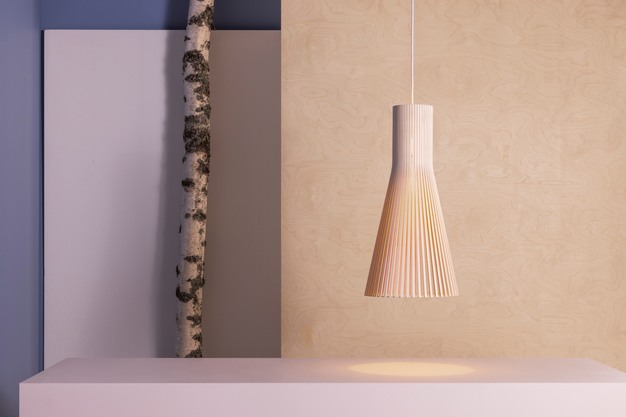
The Secto 4200 pendant lamp, designed by architect Seppo Koho and launched in 1999, is the very first model of the Secto Design lighting collection.
Project presence and market focus
Secto Design's luminaires have been integrated into high-profile projects globally, including the Wood Hotel, Mjøstårnet in Norway; the Gösta Serlachius Museum in Finland; and the Harvard Medical School library in the United States. Retail projects, such as Porsche dealerships, also feature the lamps, where consistency of material, craftsmanship, and spatial impact is critical.
Nordic countries and Western Europe remain the main markets, while North America is identified as an area for growth. Tuula Jusélius explaines that practical, reliable production processes contribute to client trust and long-term relationships internationally.
 © Secto Design
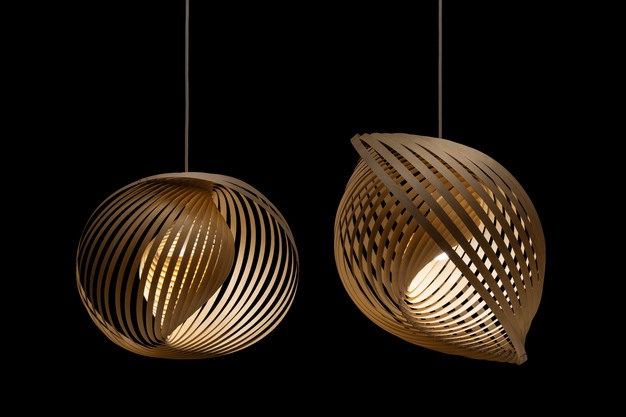
The latest model of the Secto Design collection, the Adilo pendant lamp, designed by Ilkka Kauppinen, will be launched in fall 2025.
Product development and challenges
Innovation focuses on technical adaptation without altering the established design. Recent developments include dimmable bulbs with adjustable colour temperatures and integration of Signify's BioUp technology in the Owalo pendant lamp. The company has transitioned from incandescent to LED light sources while maintaining quality standards. Intellectual property protection remains a challenge, requiring continuous monitoring, legal action, and collaboration with customs authorities.
Longevity and circularity
Secto Design prioritises durability and repairability. Spare parts and services are available, and lamps often retain value in second-hand markets. Tuula Jusélius comments: 'Longevity, repairability, and thoughtful design are at the heart of how we meet growing expectations for circularity.' New product launches, including collaborations with designers beyond Seppo Koho, aim to maintain a consistent design language rather than chase trends, ensuring continuity for both clients and markets.
 © Secto Design | Anthony Trabano
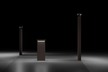
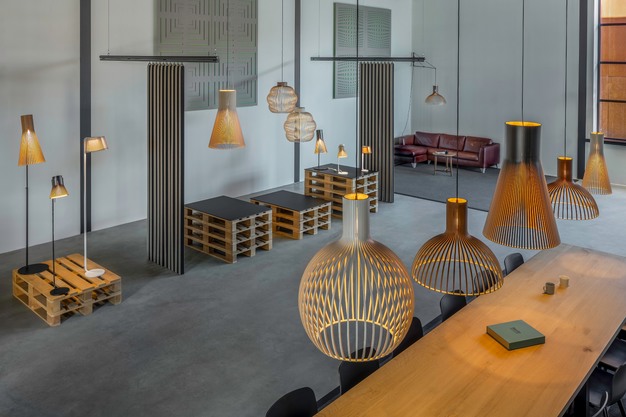
Tunnelmadesign Showroom in Amersfoort, The Netherlands. Photo by Anthony Trabano.
More information:
Secto Design
Kauppalantie 12
02700 Kauniainen
+358 9 5050 598
[email protected]
www.sectodesign.fi
Finland