
Poland's external financial position remains stable despite a widening current account deficit, according to the latest data from ING. The country faces rising headwinds from persistent trade imbalances and looming geopolitical tensions, with implications for the European furniture and interiors sectors that rely on Polish exports and supply chains.
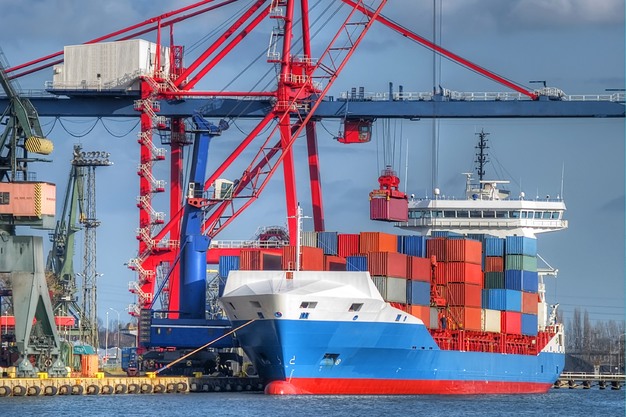 © Jaroslaw Baczewski | Dreamstime
In May 2025, Poland's current account deficit surged to €1.74 billion, widening from €596 million in April. This was 'worse than the consensus (€666 million) and our forecast of €750 million,' noted ING's Senior Economist, Leszek Kasek. On a 12-month basis, the deficit reached 1.0% of GDP, with the trade gap alone growing to 1.6% of GDP.
Despite the deficit, Poland's trade activity showed renewed momentum. Exports rose 4.2% year-on-year in May, rebounding from April's 1.9% decline, driven by one extra working day and revived demand for certain goods. 'Export growth in May (measured in PLN) was strongest in clothing and pharmaceutical products, including re-exports,' according to the National Bank of Poland (NBP). Imports increased 5.2% year-on-year, spurred by Poland's modest economic recovery.
May marked the thirteenth consecutive month of a trade deficit, a trend ING expects to persist. 'We forecast a gradual widening of the current account deficit to 1.3% of GDP by the end of the year, partly due to a further deterioration in the trade deficit,' said Kasek.
For European furniture manufacturers, Poland's position as a key exporter, particularly of metal and modular components, makes these developments particularly relevant. The sector now faces an additional challenge from a recent policy shift in the US. 'According to Donald Trump's surprising decision on Saturday, 30% tariffs on imports of goods from the EU will apply from 1 August,' raising fresh concerns for Polish and European value chains.
While Poland's zloty remains relatively stable around 4.25 per euro, ING sees 'geopolitical factors and changes in the main currency pair USD/EUR' as key influences going forward. Poland's external accounts may be solid for now, but for the interiors industry, trade uncertainty is once again at the door.
More information:
ING
www.think.ing.com