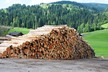


In a study presented on 26th January, researchers from the Technical University of Berlin (TU Berlin) have illuminated the environmental impact of building materials, with a specific focus on wood-based construction methods. The findings unveil a significant revelation: wood-based constructions produce approximately 40% fewer carbon emissions during production compared to their mineral-based counterparts.
Photo © Kasto80 | Dreamstime.com
Situated on the grounds of the former Tegel Airport in Berlin, the Schumacher Quartier is emerging as Germany's largest urban wooden construction district, spanning an impressive 48 hectares. The primary objective of this ambitious project is to minimise the carbon footprint associated with construction activities. Spearheaded by students from TU Berlin, the research initiative delved into the comprehensive examination of value chains in wooden construction using the Schumacher Quartier as a case study.
Study Overview:
The recently published study meticulously analyses six distinct types of building constructions, comprising two mineral-based and four wood-based options that are under consideration for the district.
Key findings
1. Reduced carbon emissions: Wood-based constructions were found to generate approximately 40% fewer carbon emissions during the production phase compared to their mineral-based counterparts.
2. High carbon sequestration potential: Wooden construction methods demonstrated a significantly higher carbon sequestration potential than those based on mineral resources. Depending on the construction method, this potential ranged from 4 to 19 times higher than mineral-based methods.
3. Transportation impact: The study highlighted the crucial role of transportation routes in carbon emissions, with the emissions being notably dependent on the weight of the transported materials.
Source: www.holzbauaustria.at